

Projection Screens
High-quality projection screens for home cinema, business & presentations
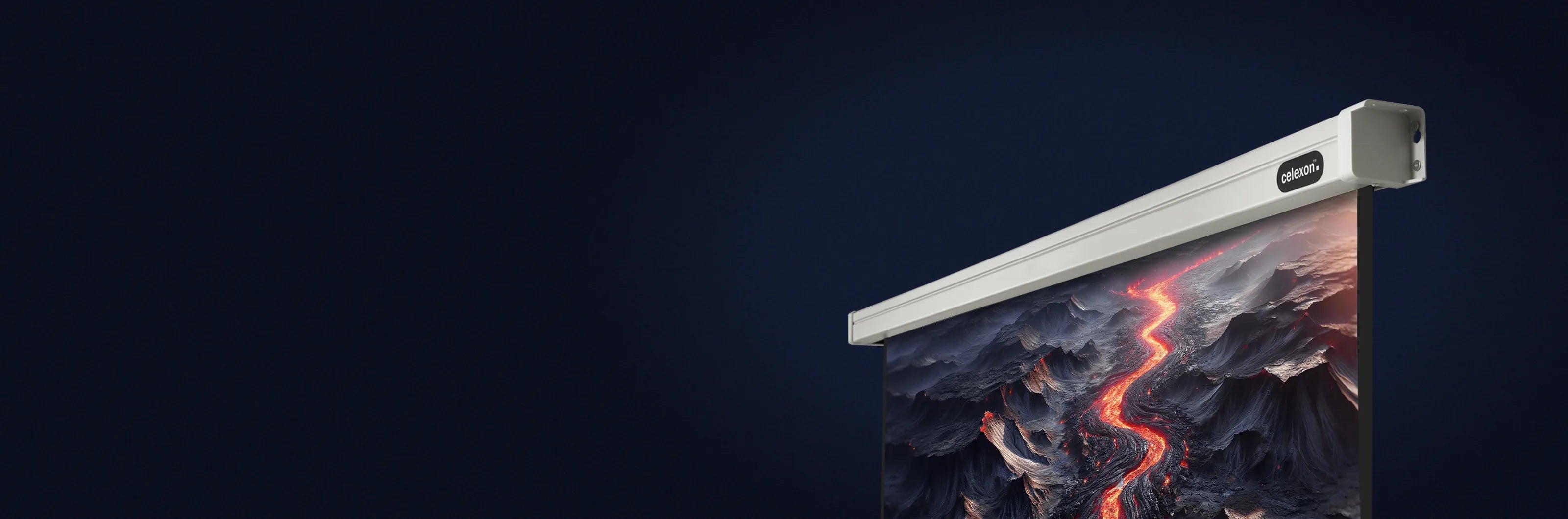
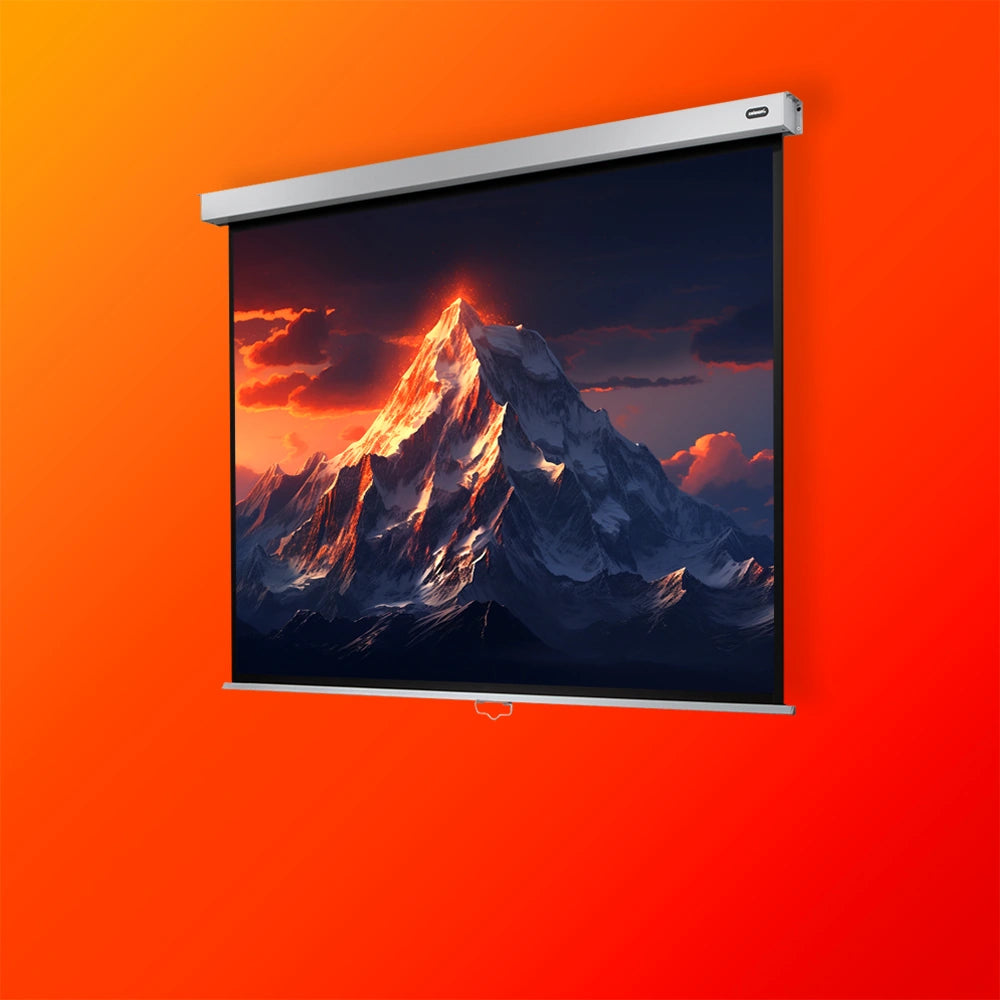
Experience brilliant colors and crisp contrasts with our projection screens – perfect for home cinema, presentations, conferences and gaming. Whether in the living room, meeting room or lecture hall – our projection screens deliver optimal image quality for every application. Choose from electric screens, manual roll-up screens, frame screens and mobile screens – from the affordable Economy series for beginners to the Expert series for the highest demands.
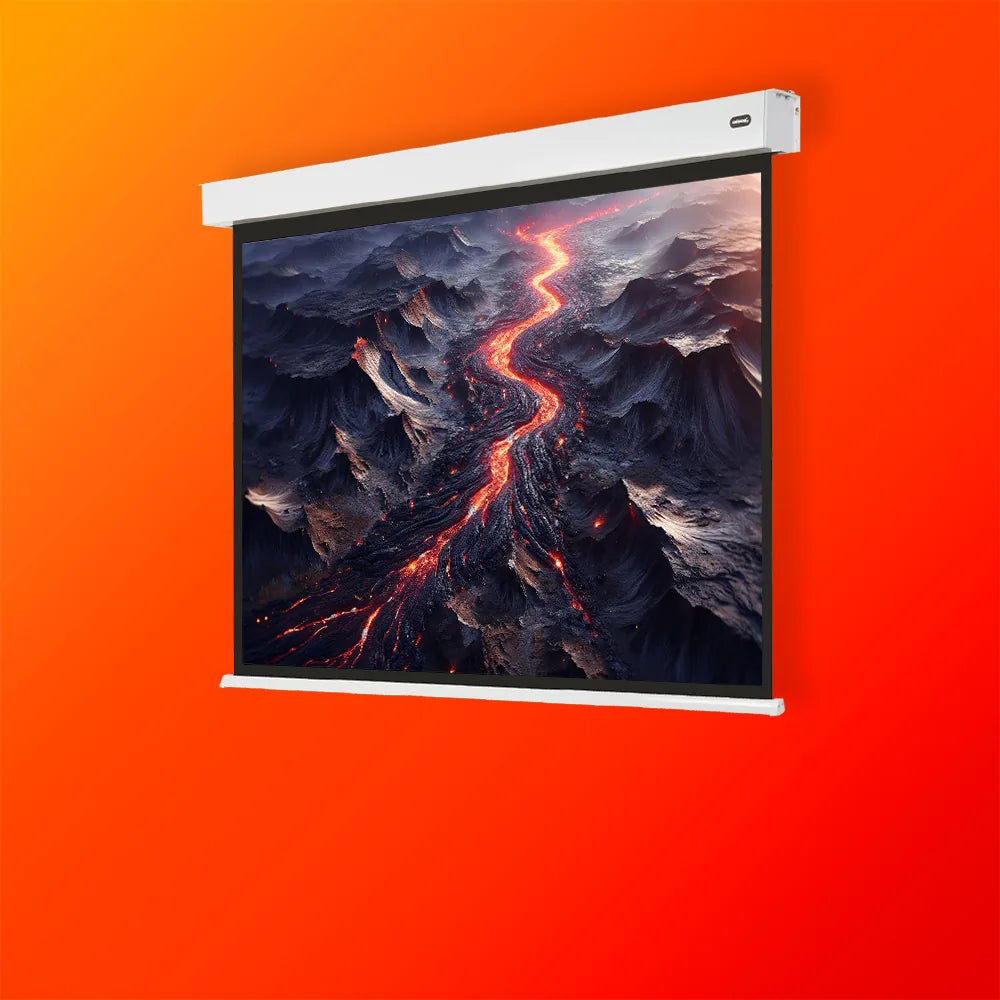
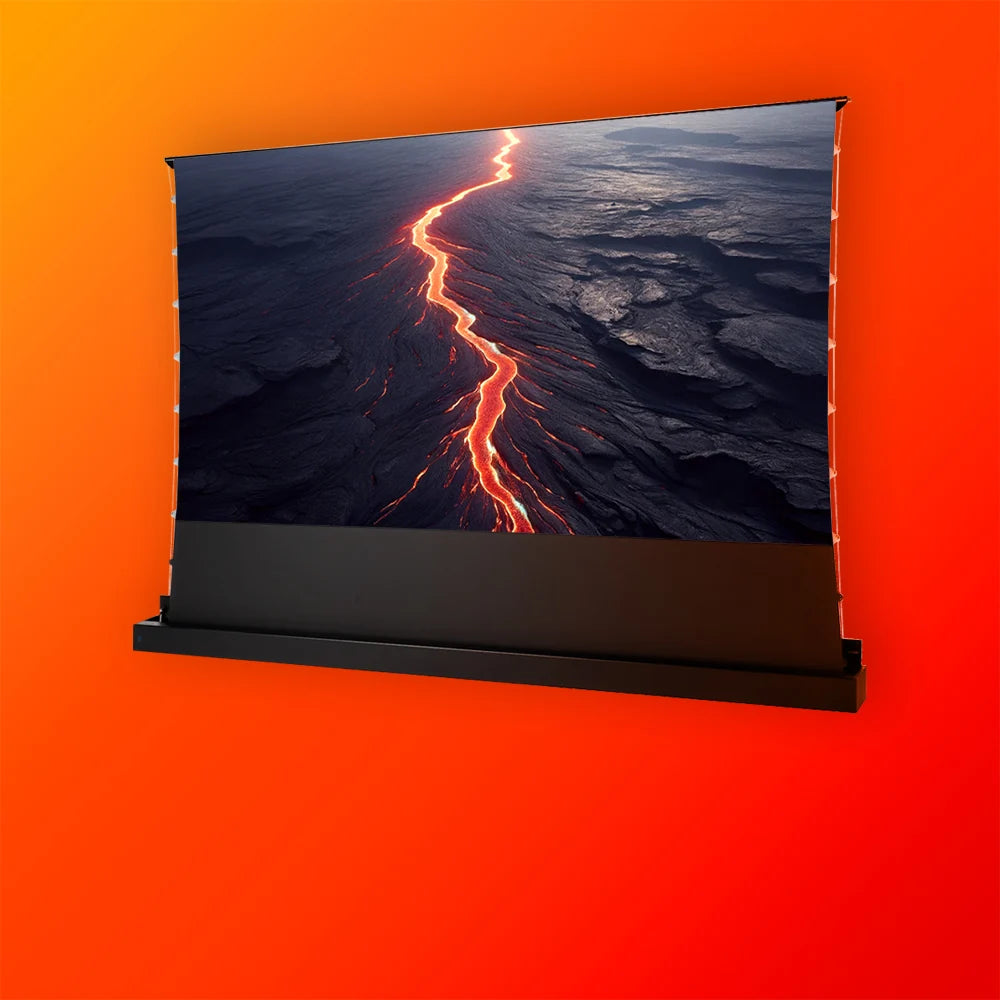
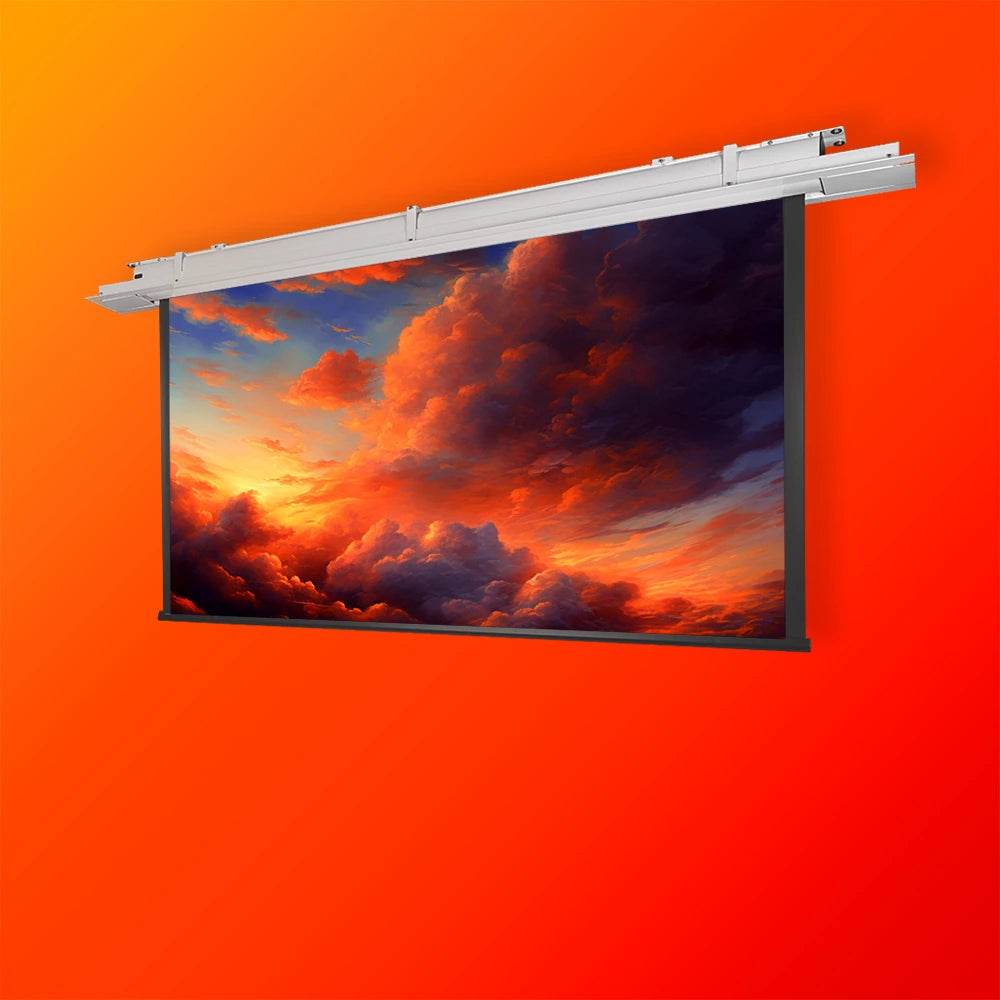
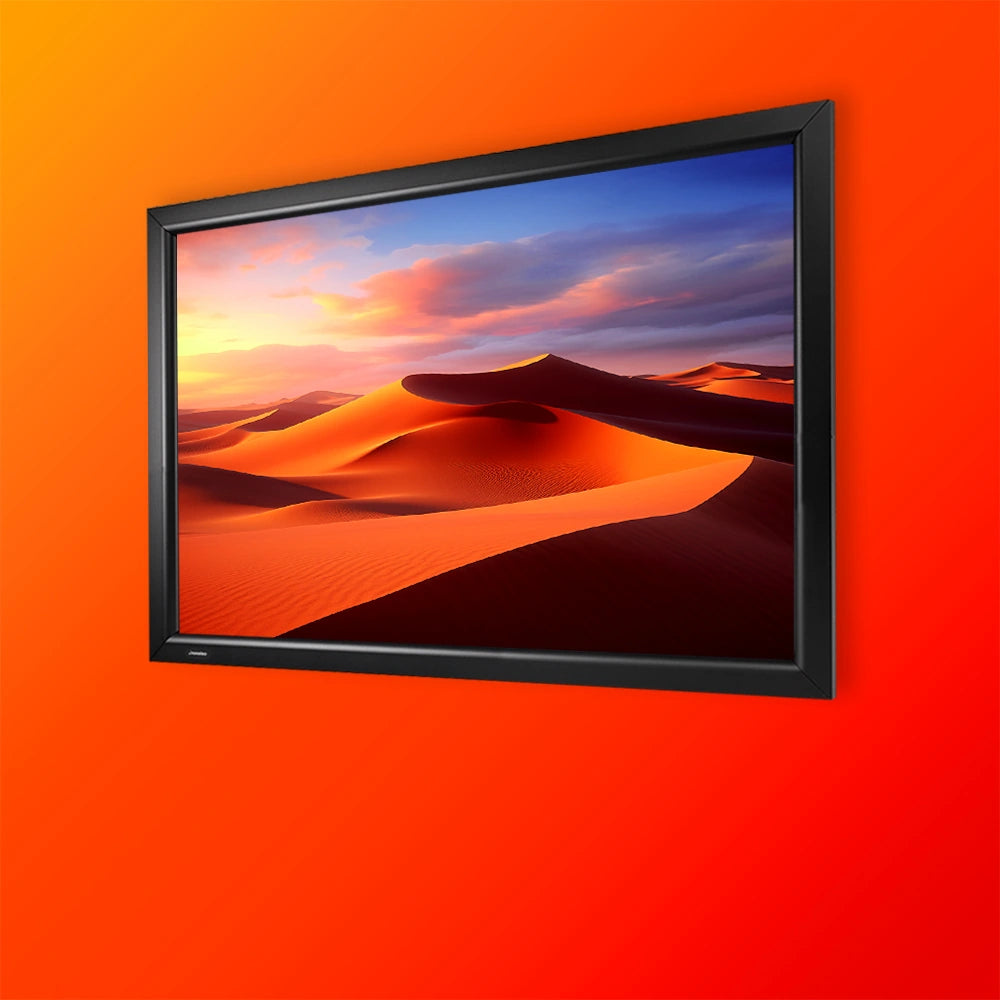
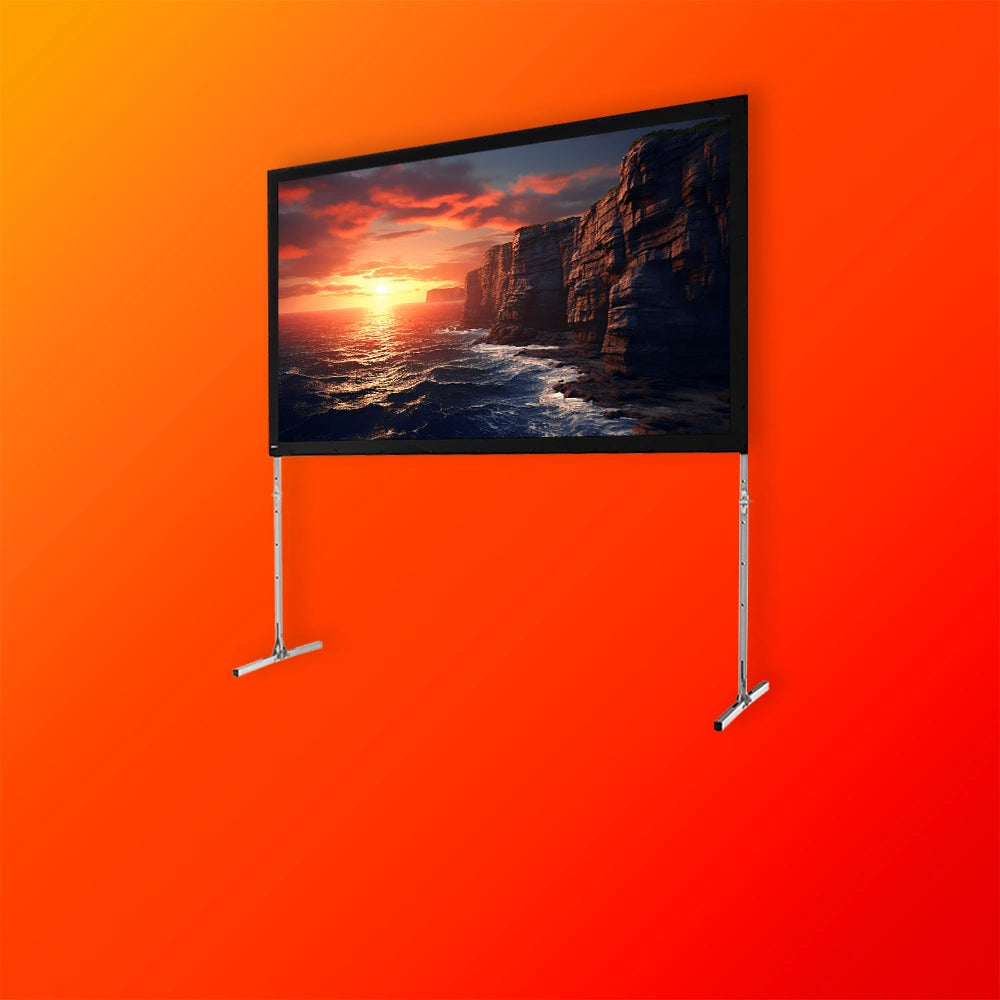
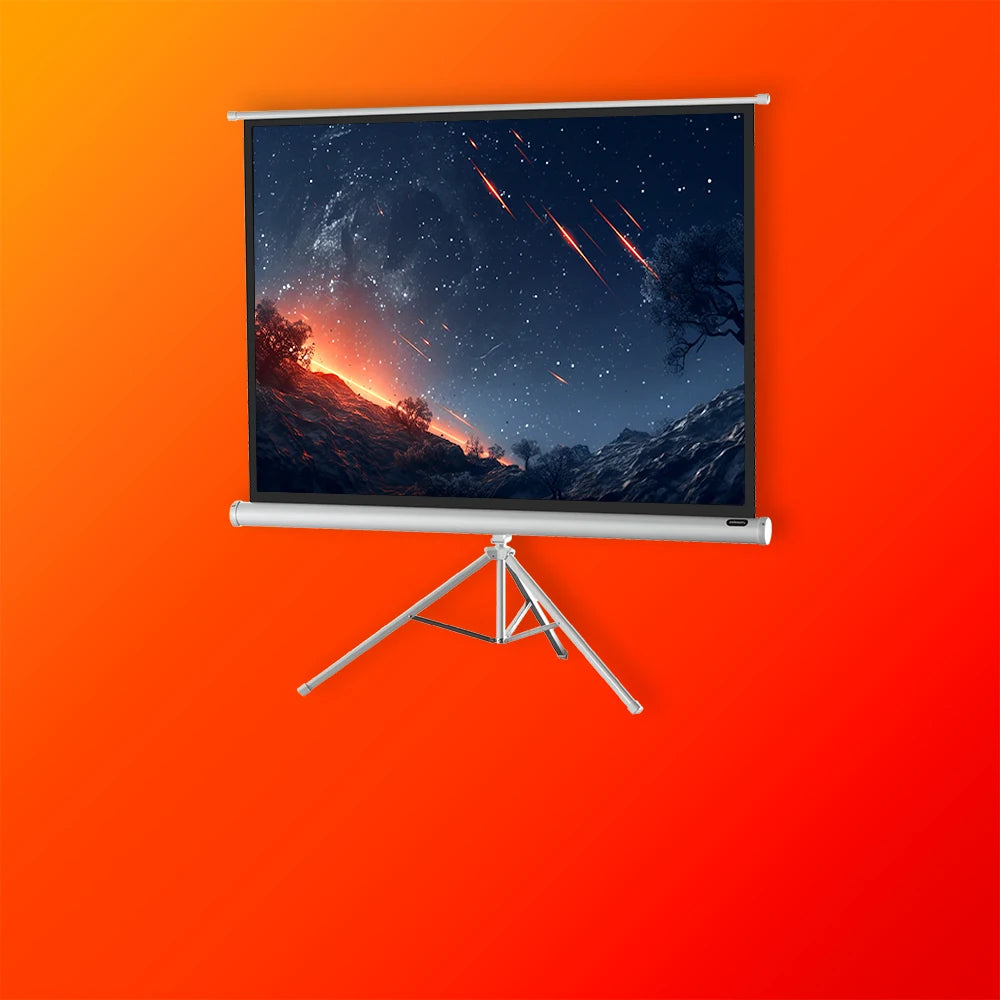
Filters
42 products
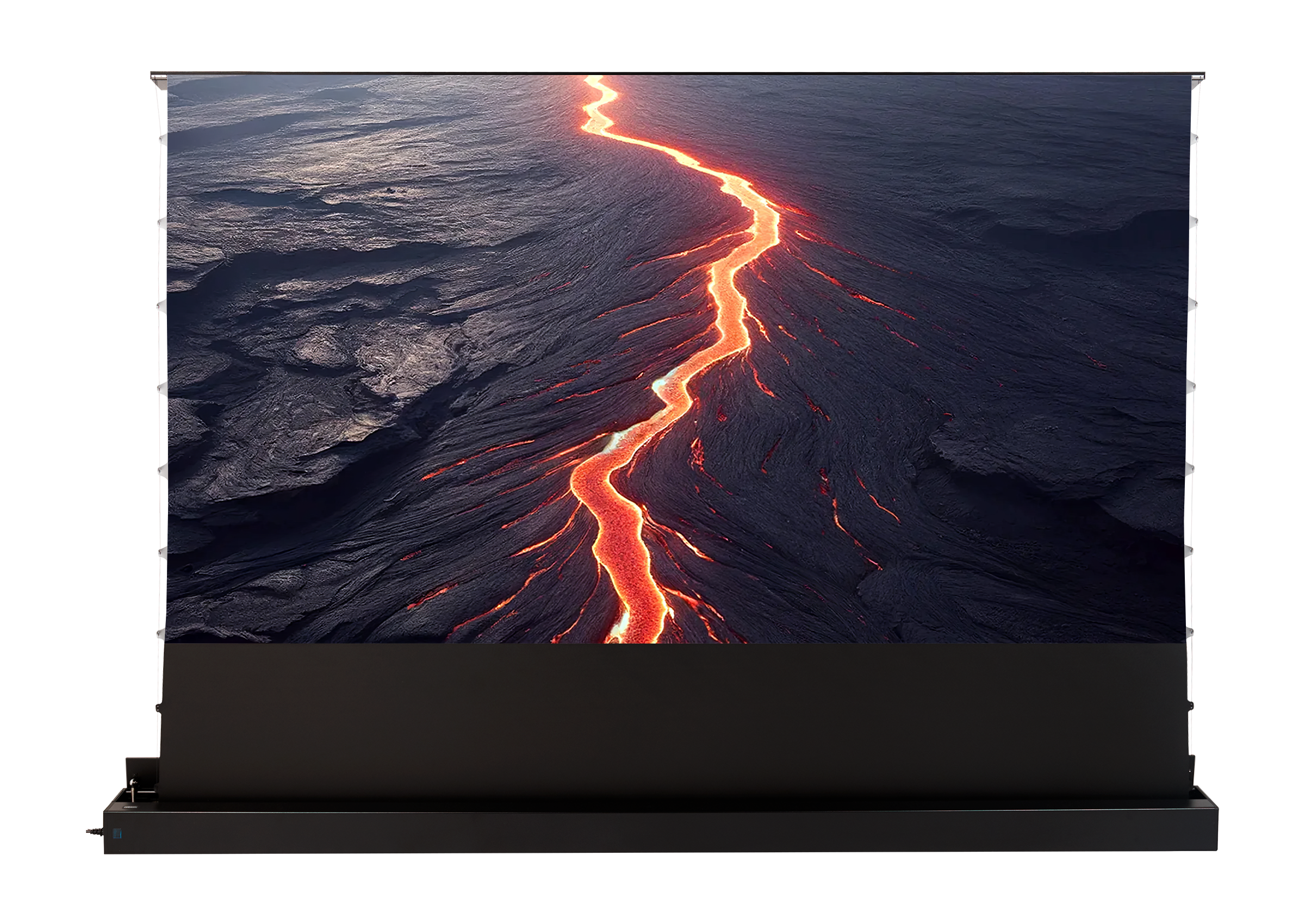
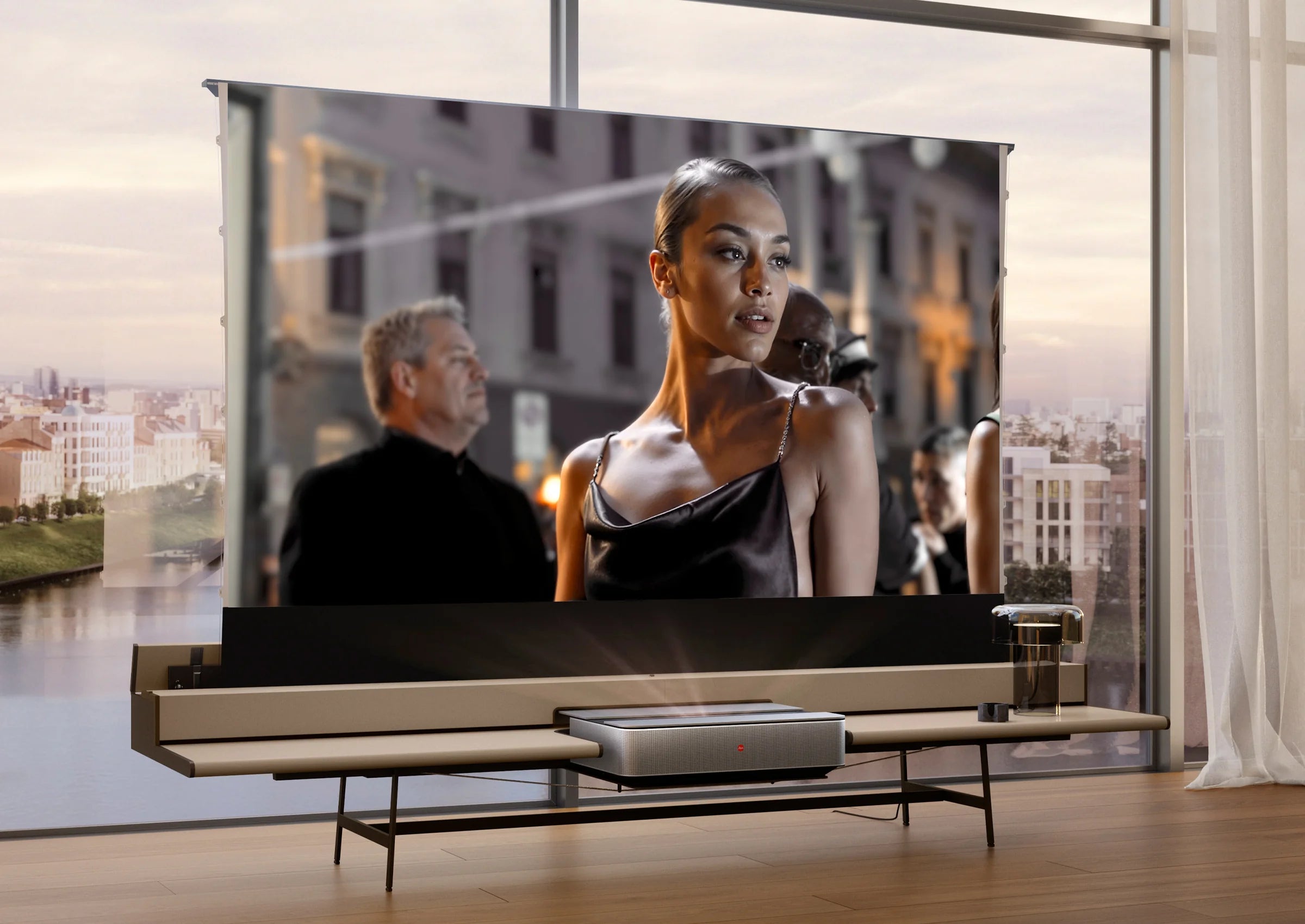
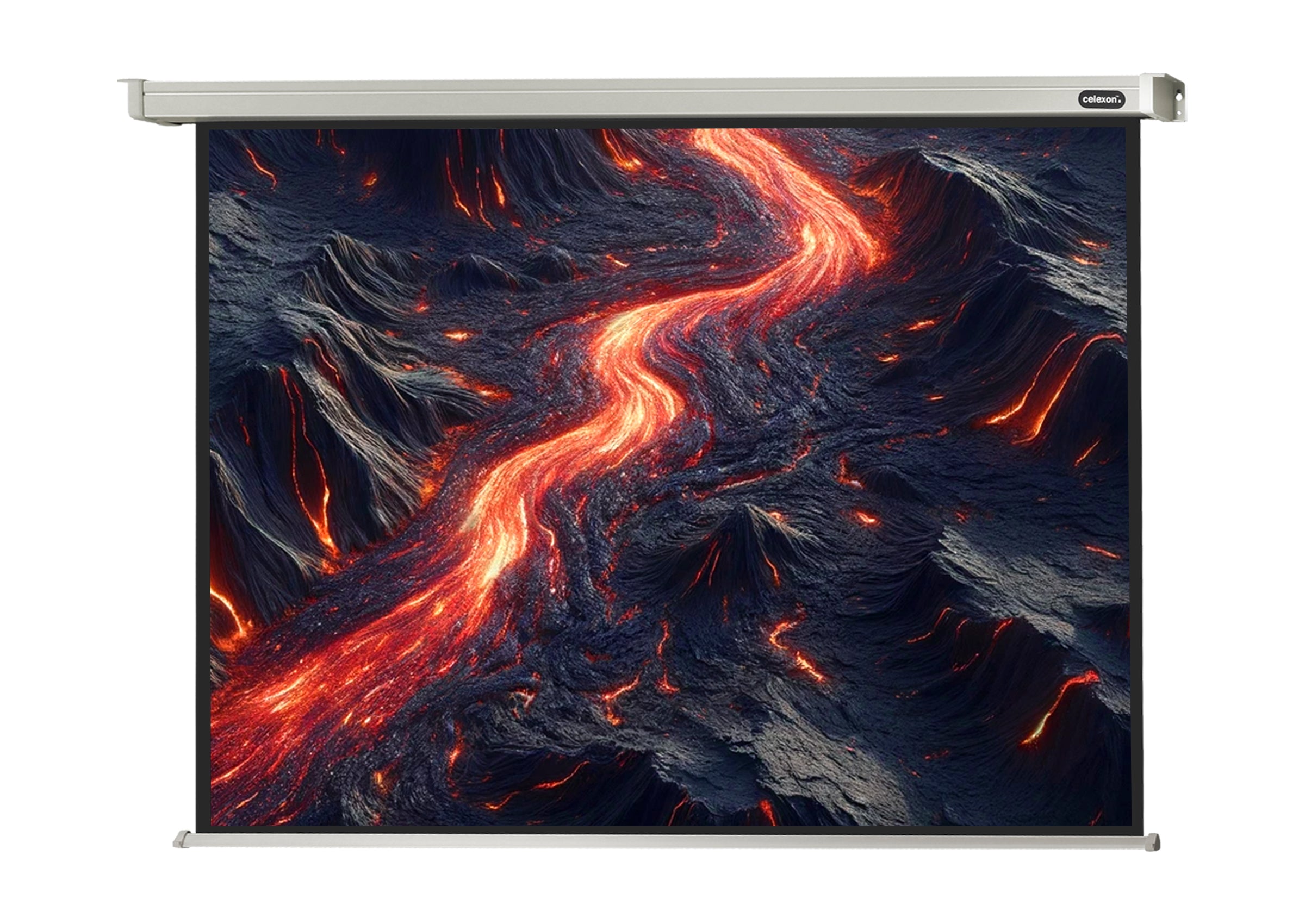
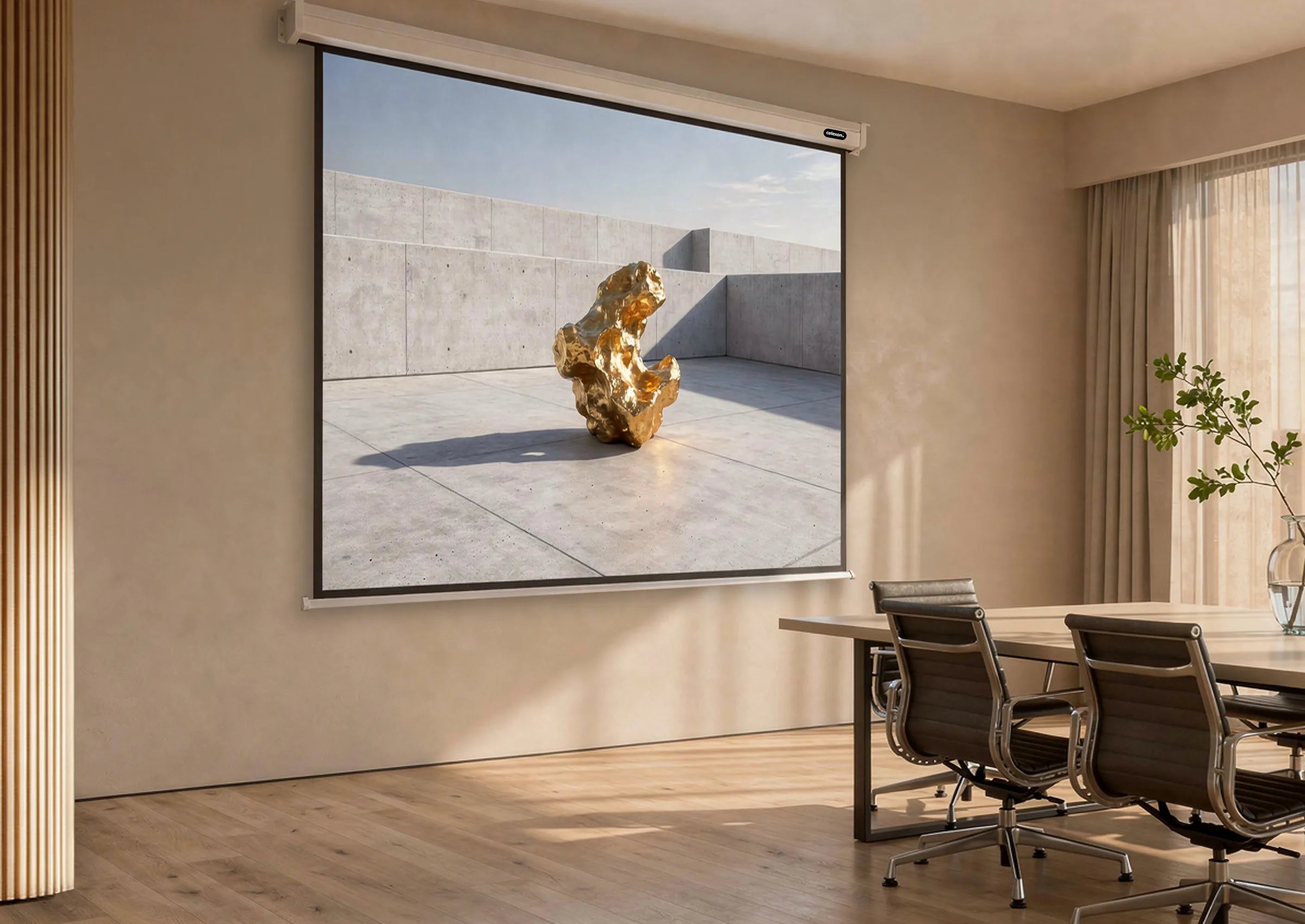
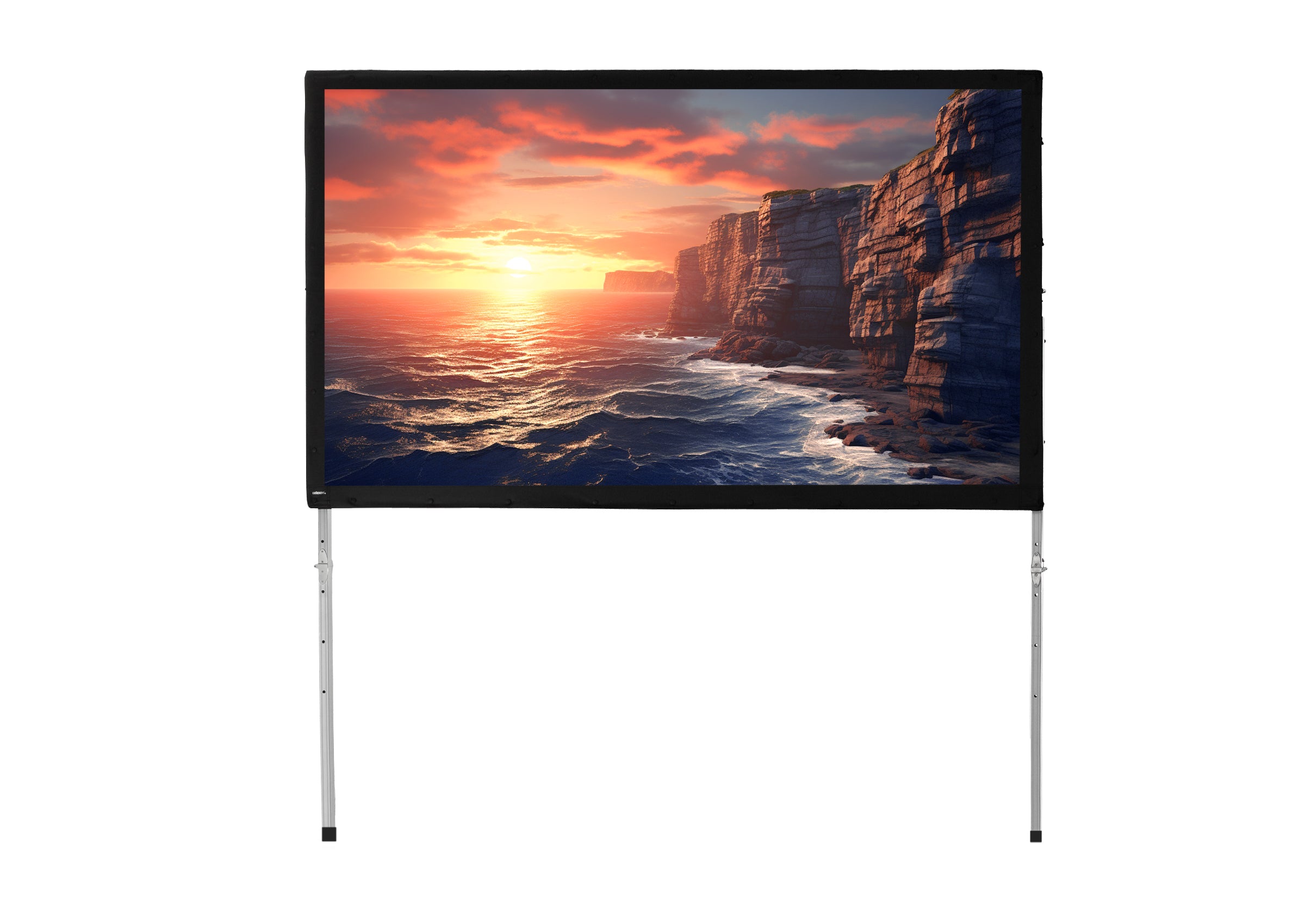


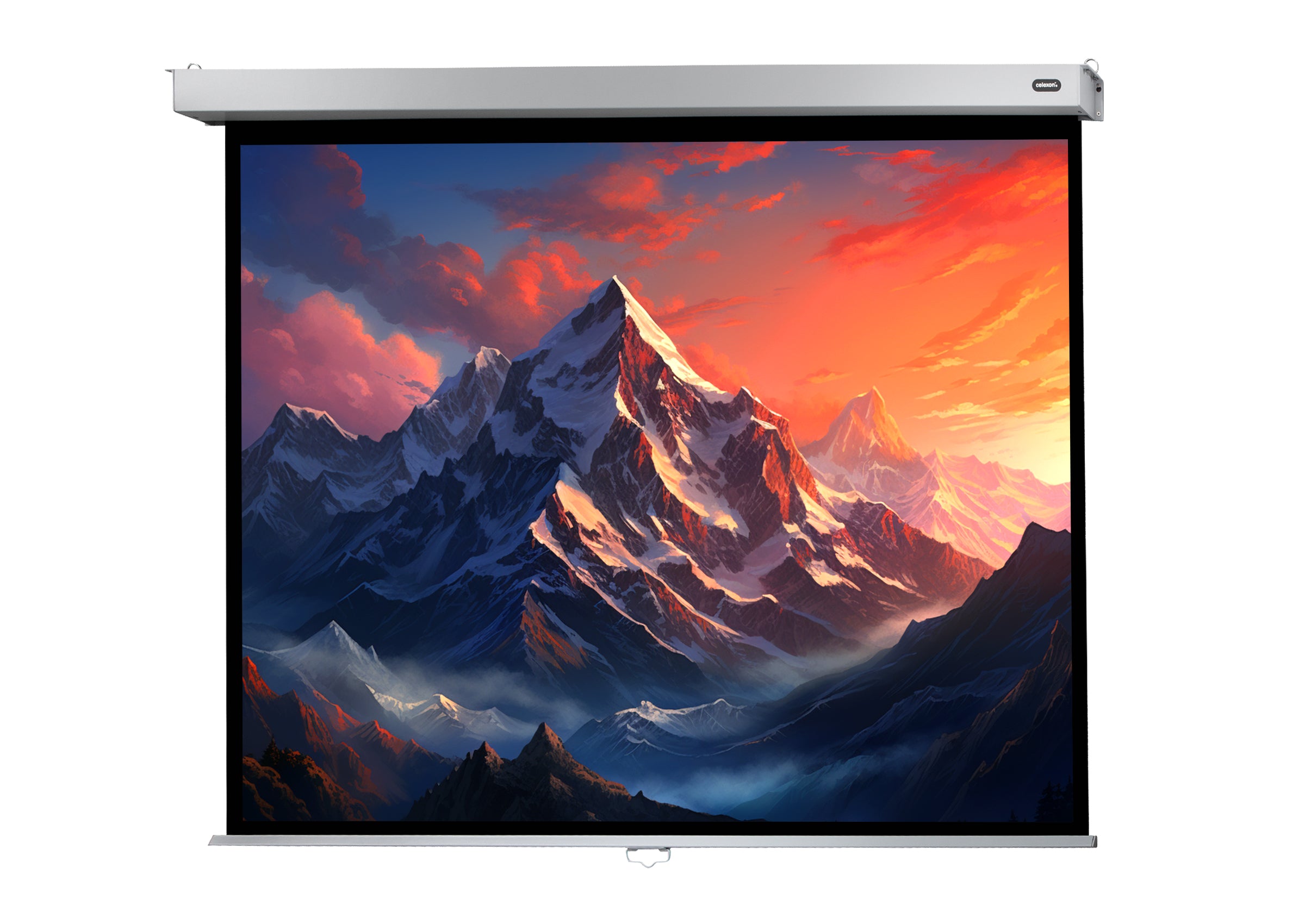
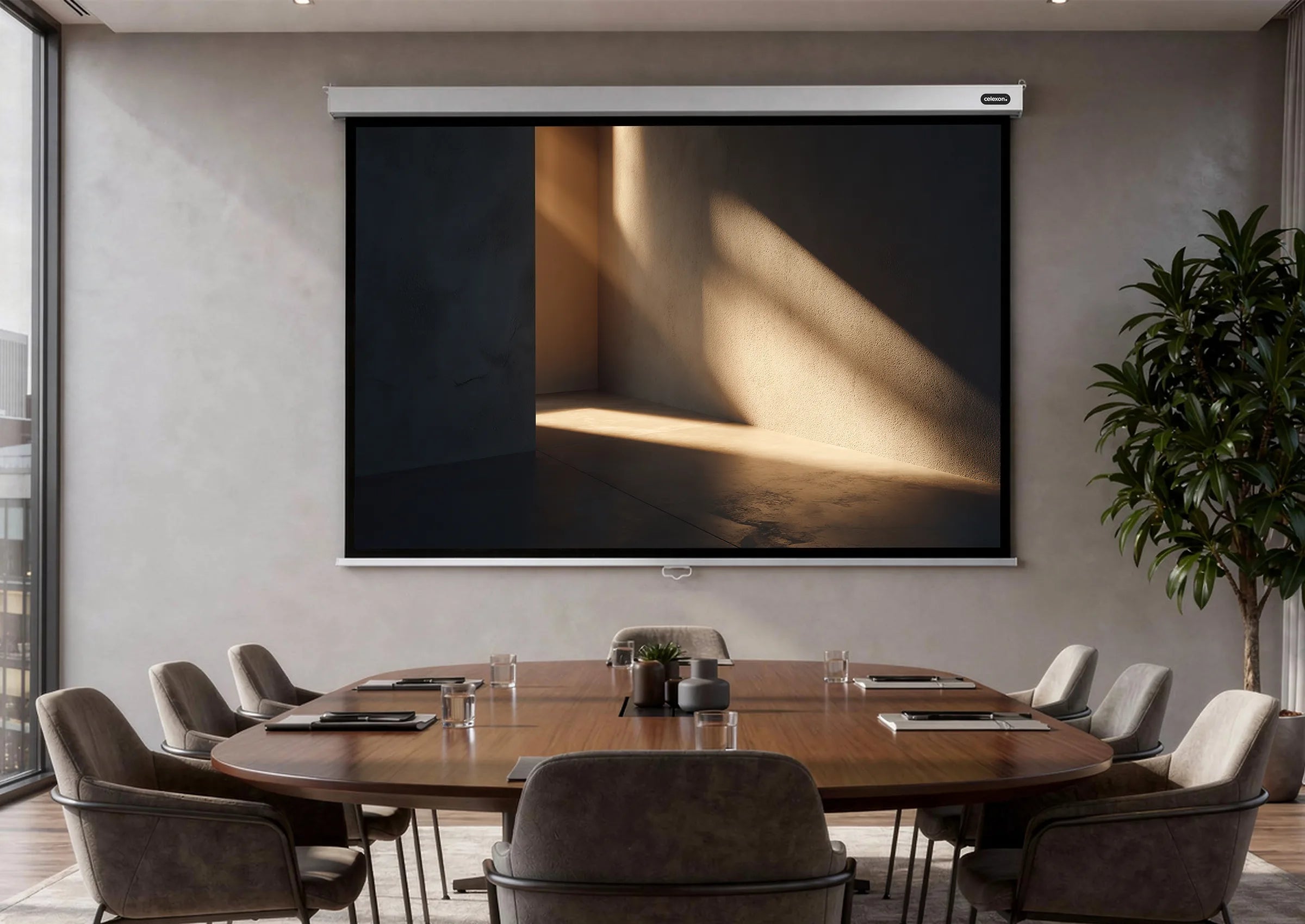
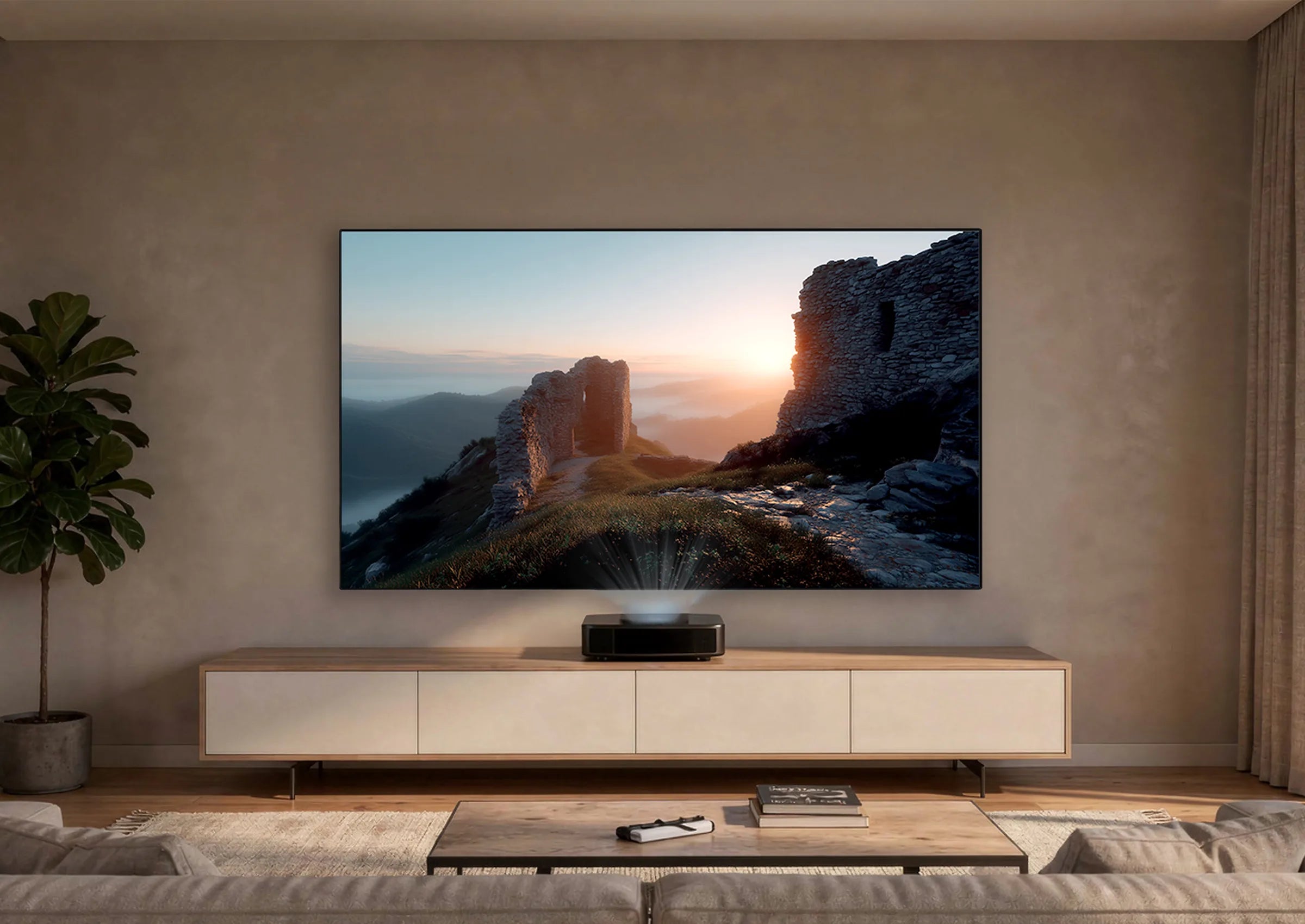
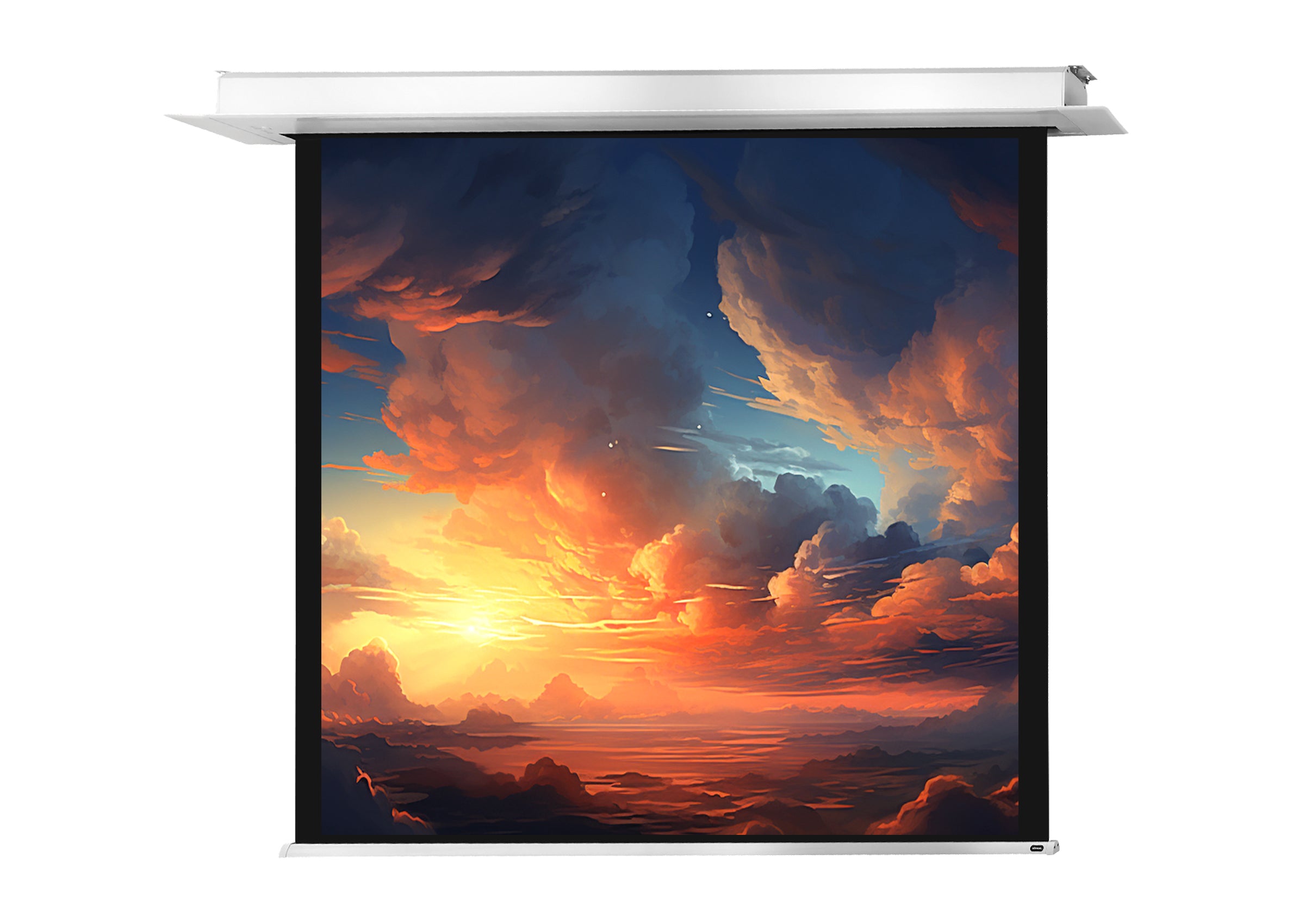
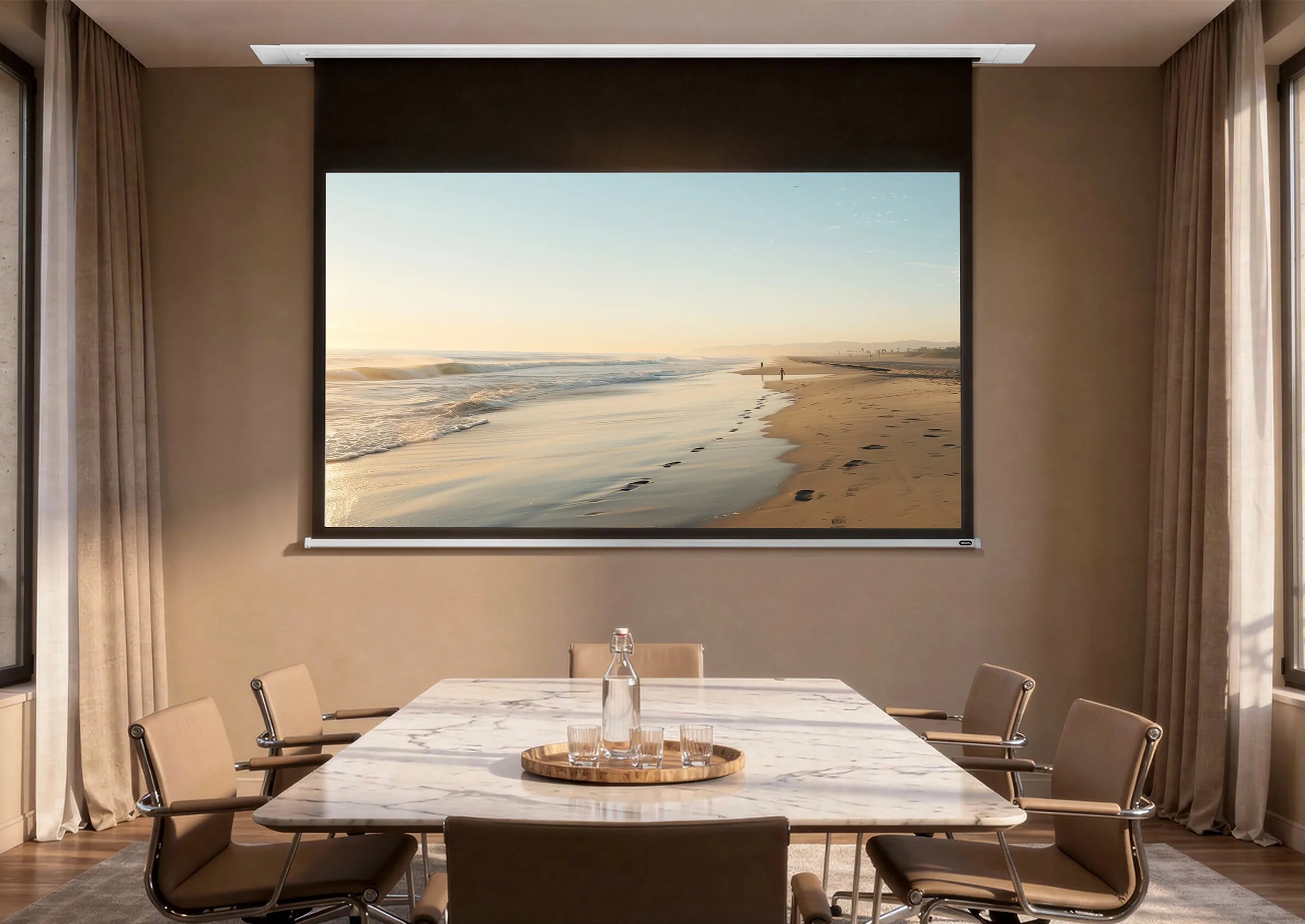
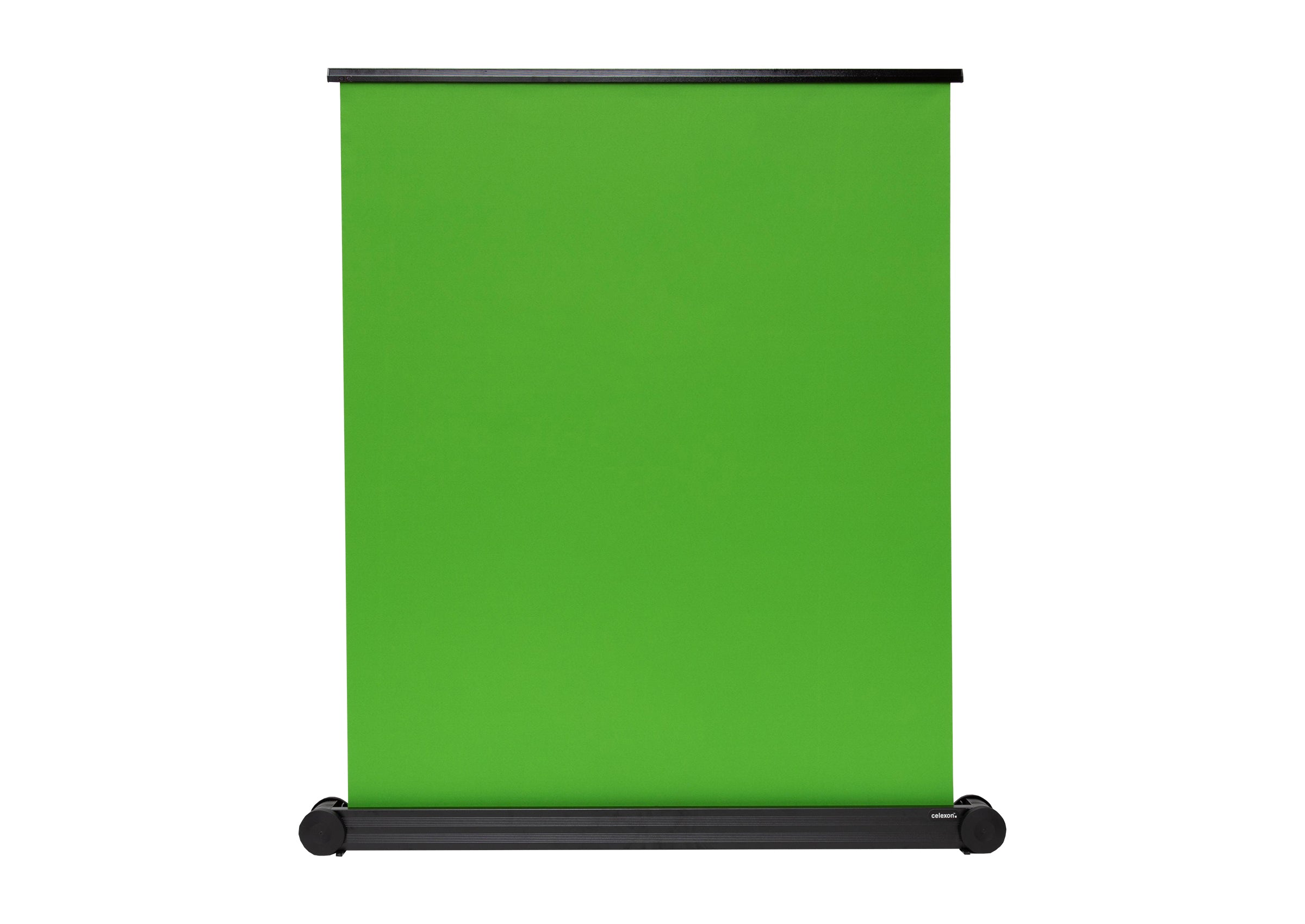
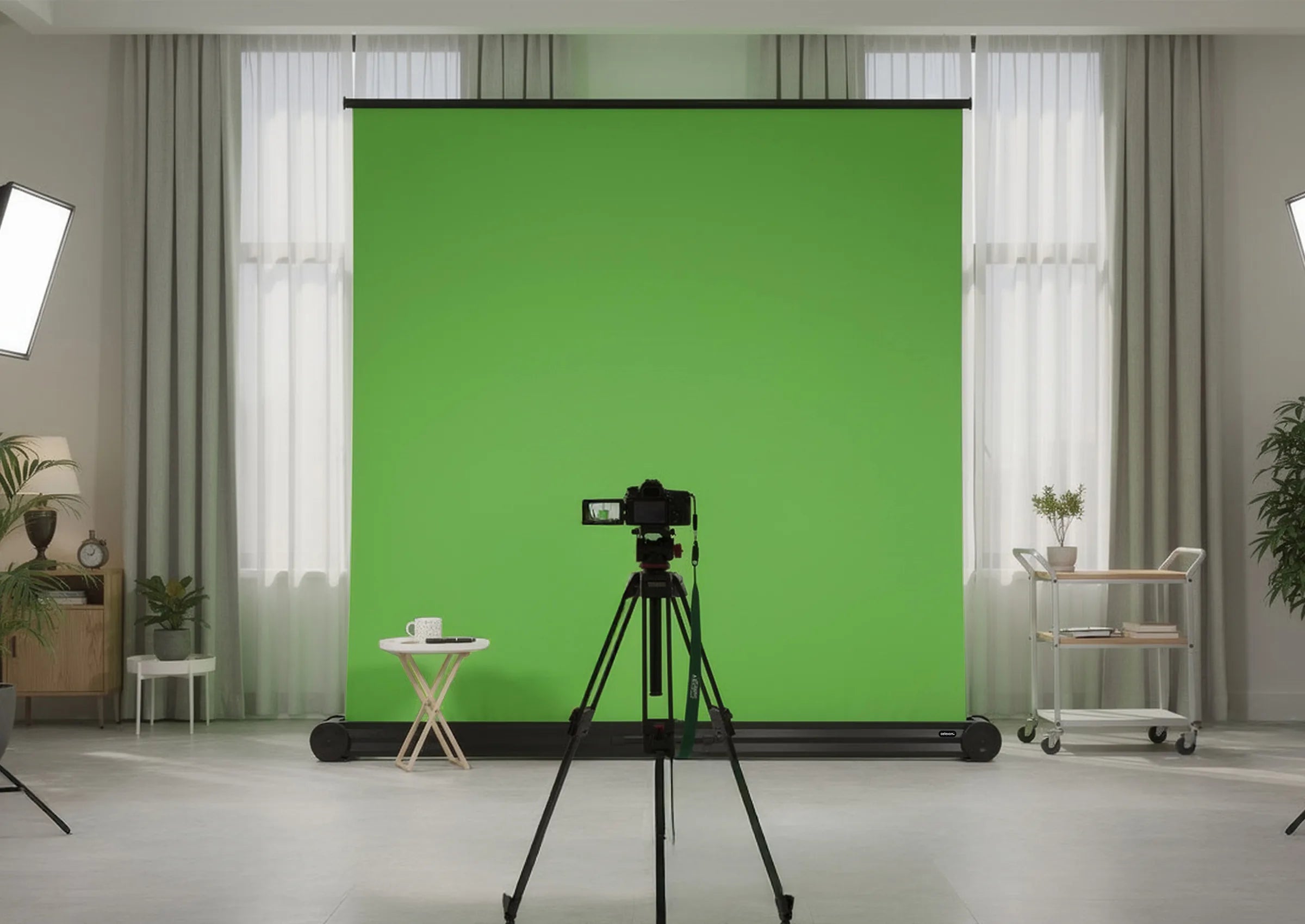
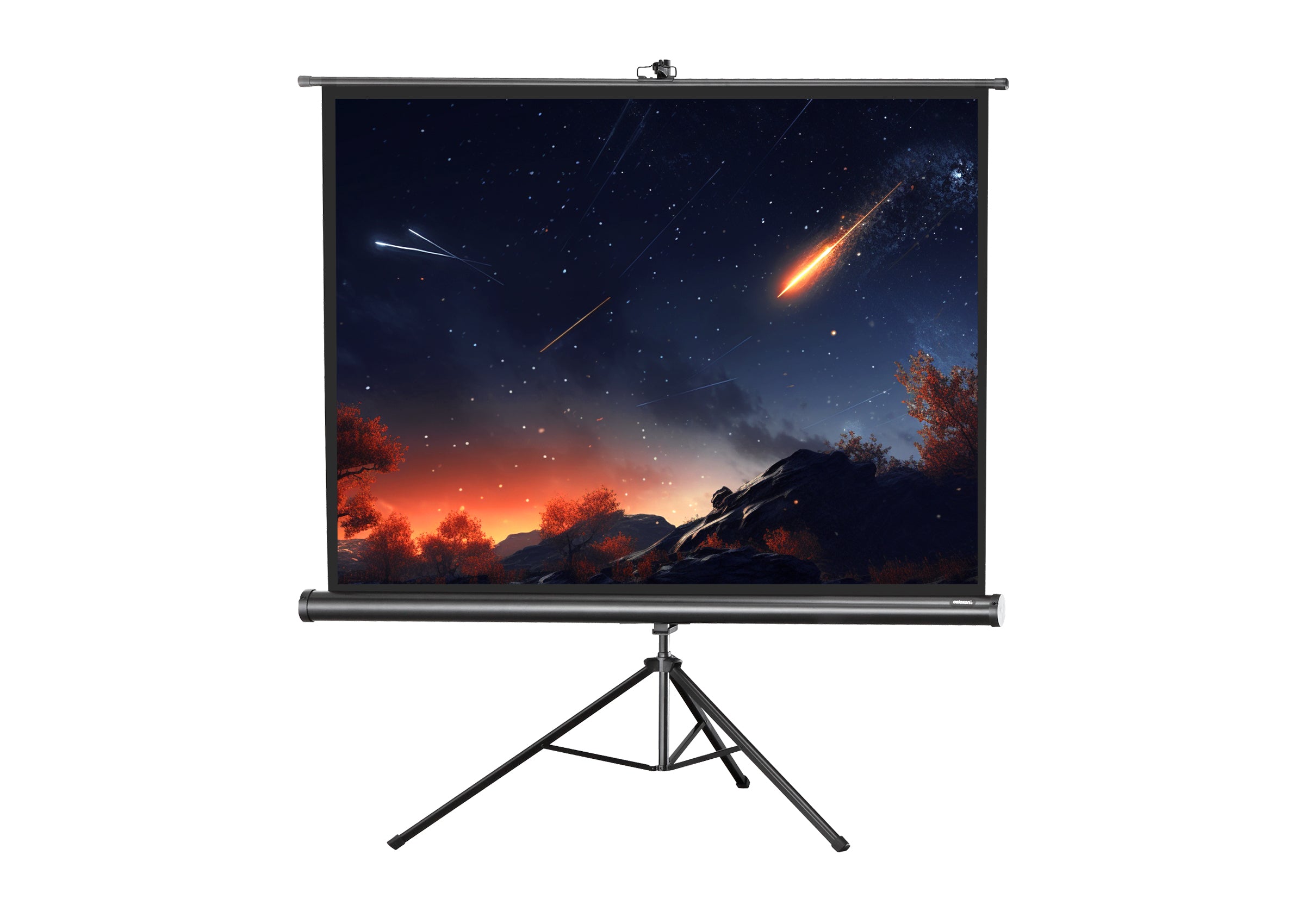
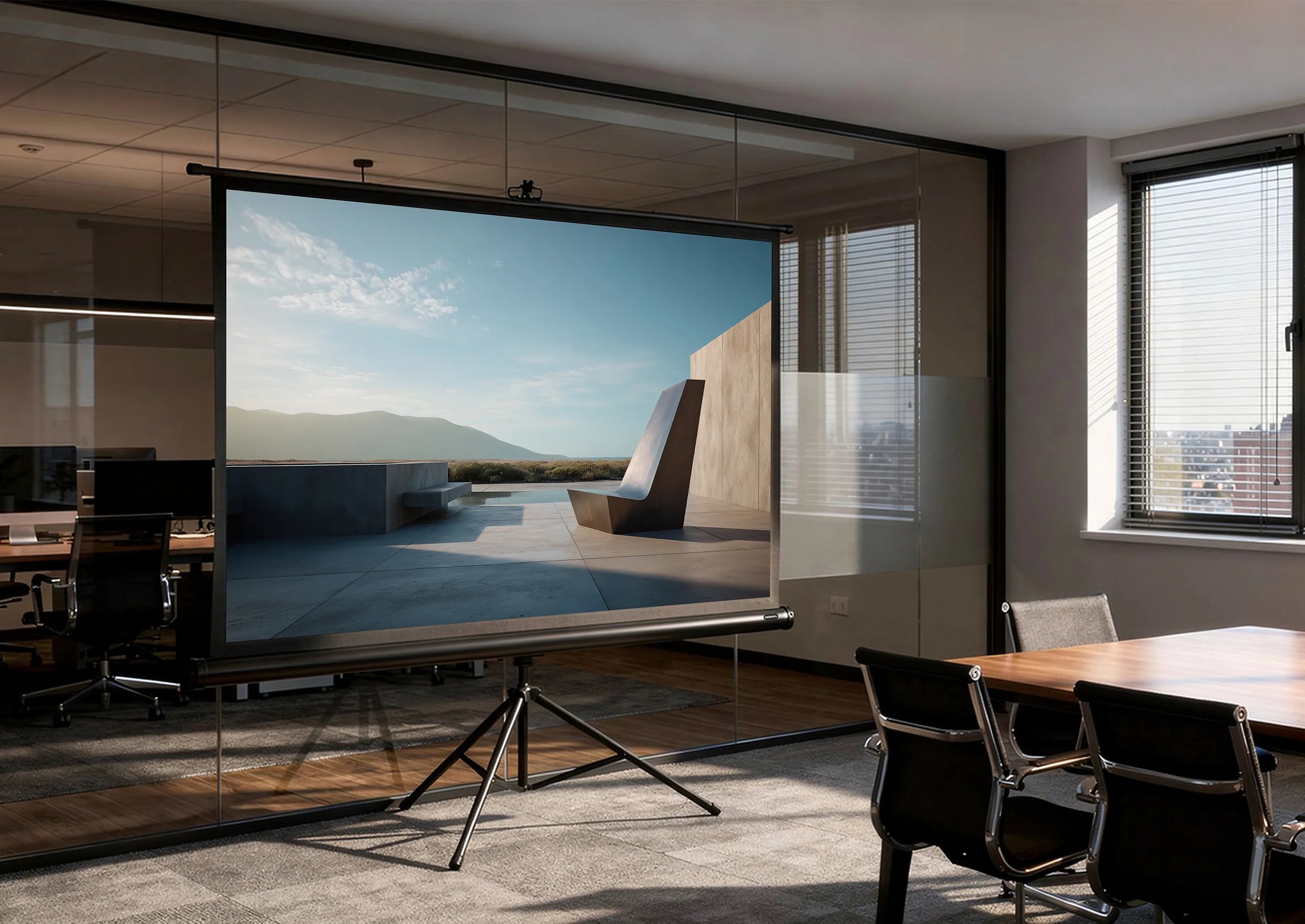
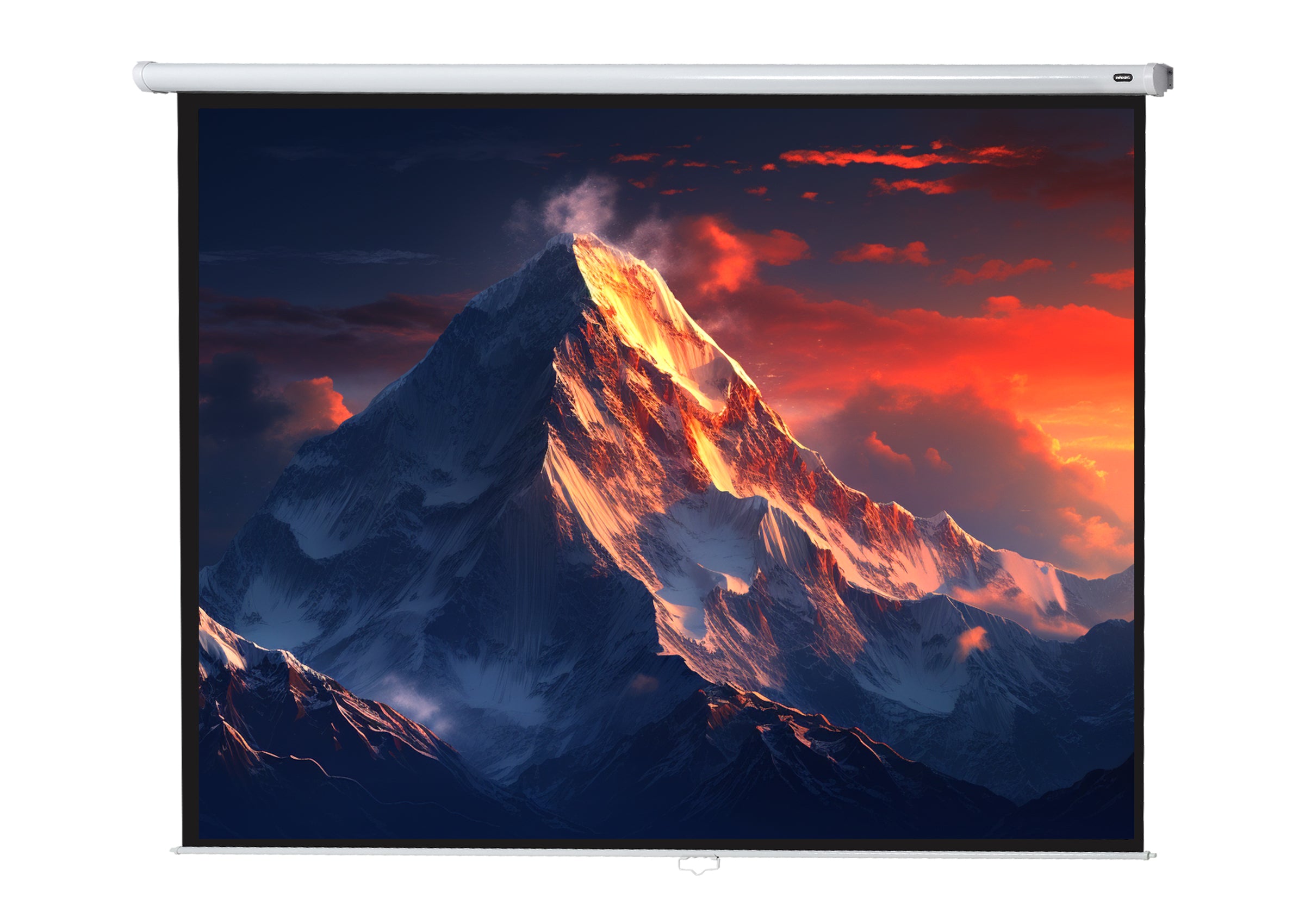
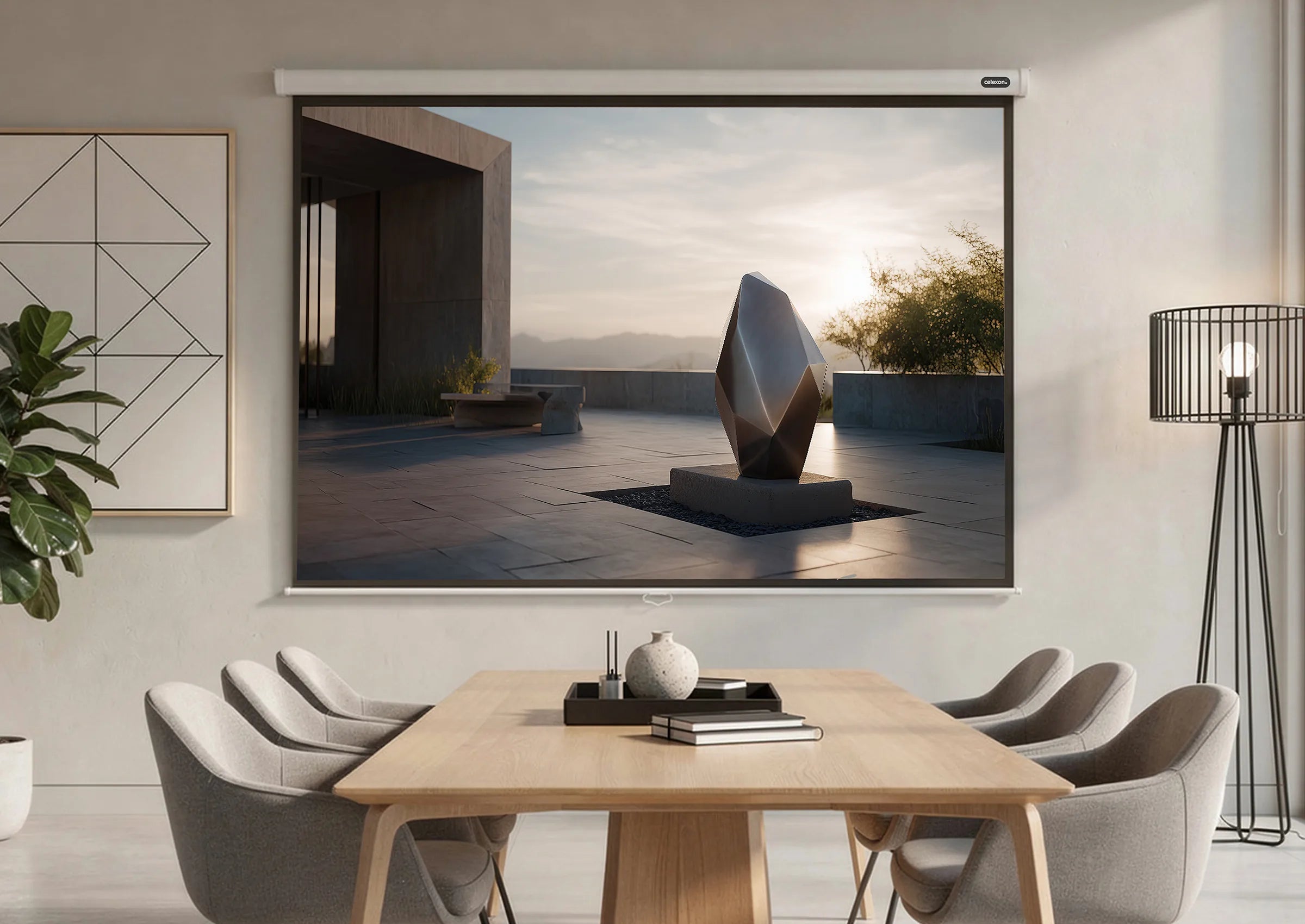


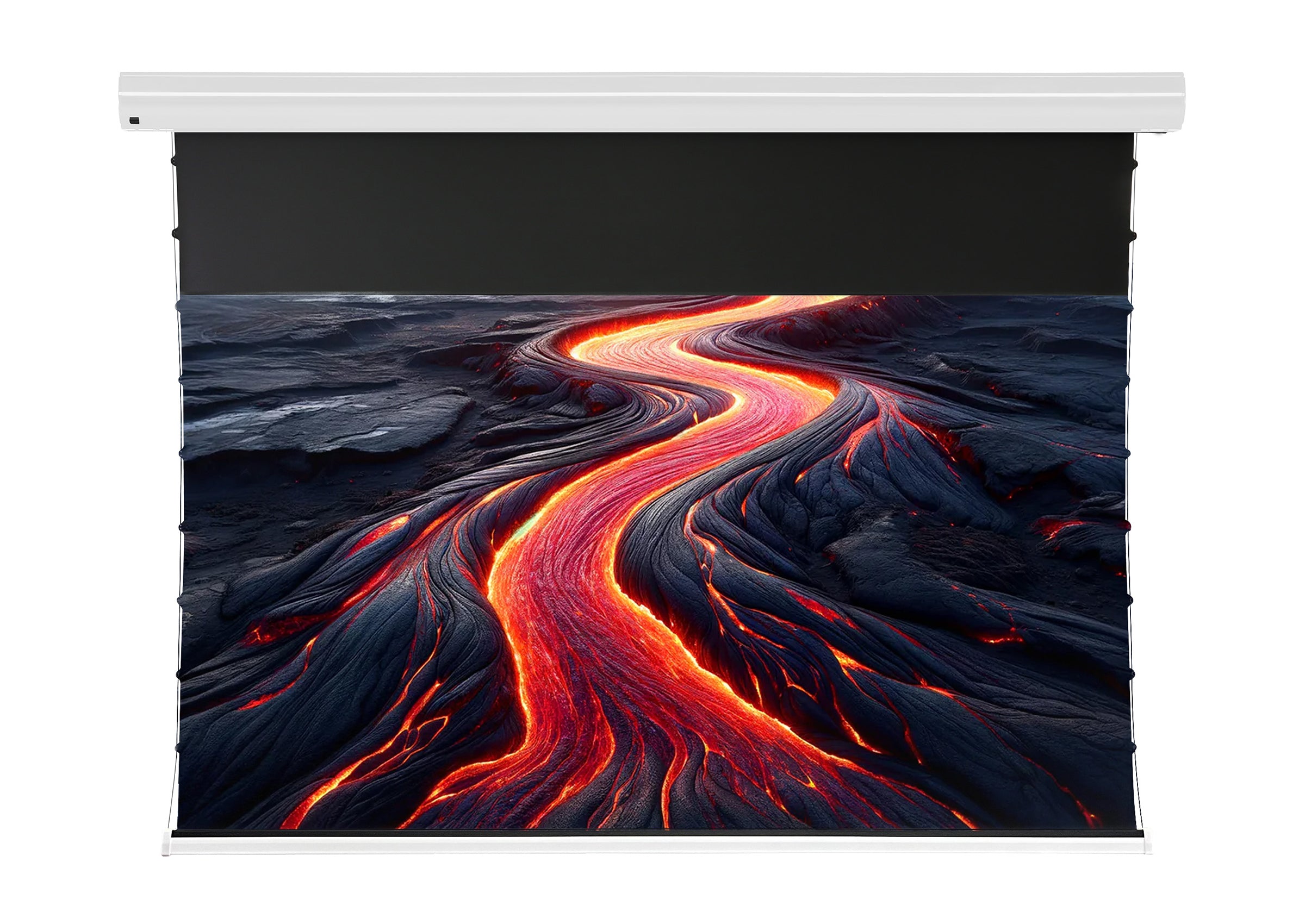
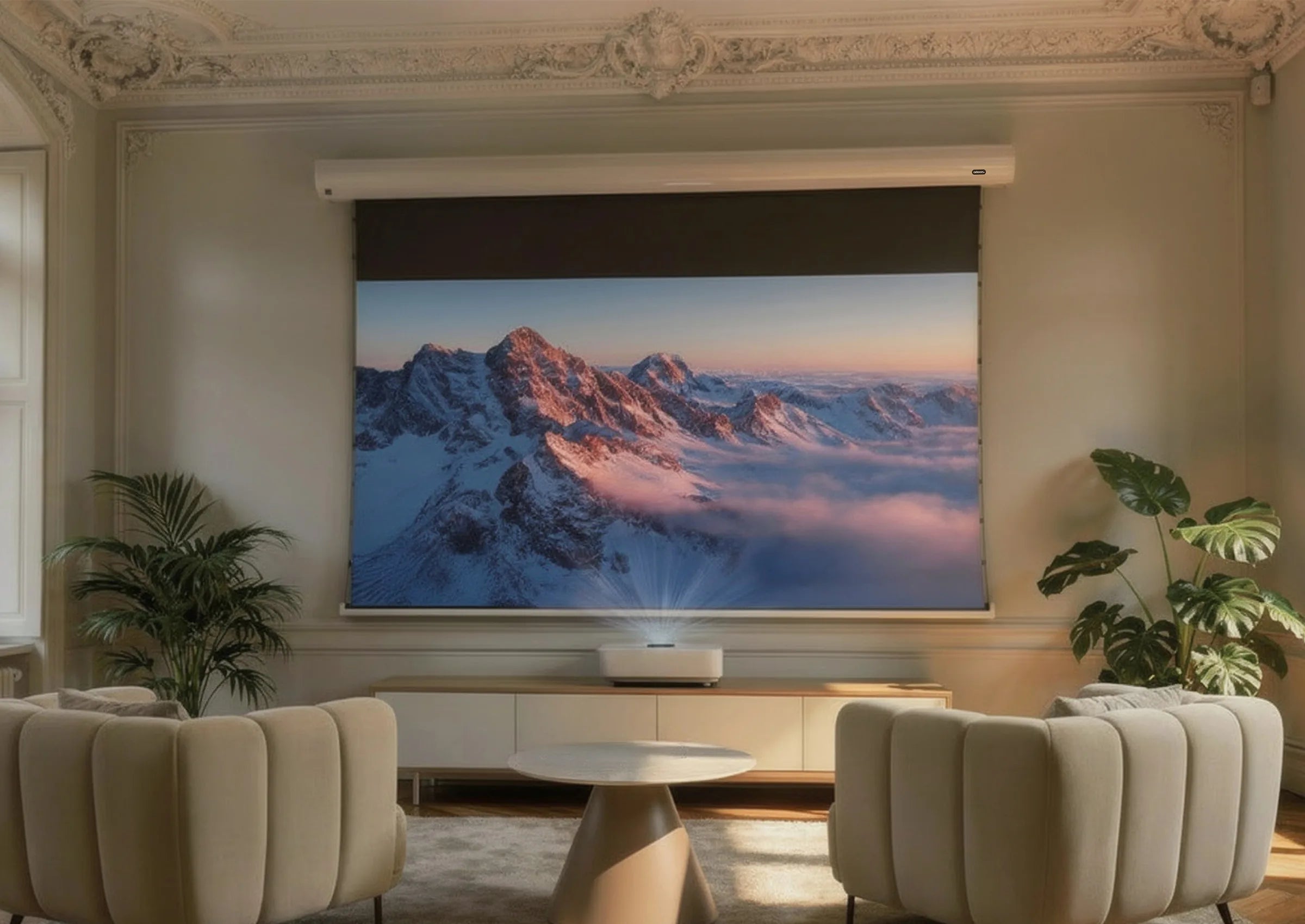
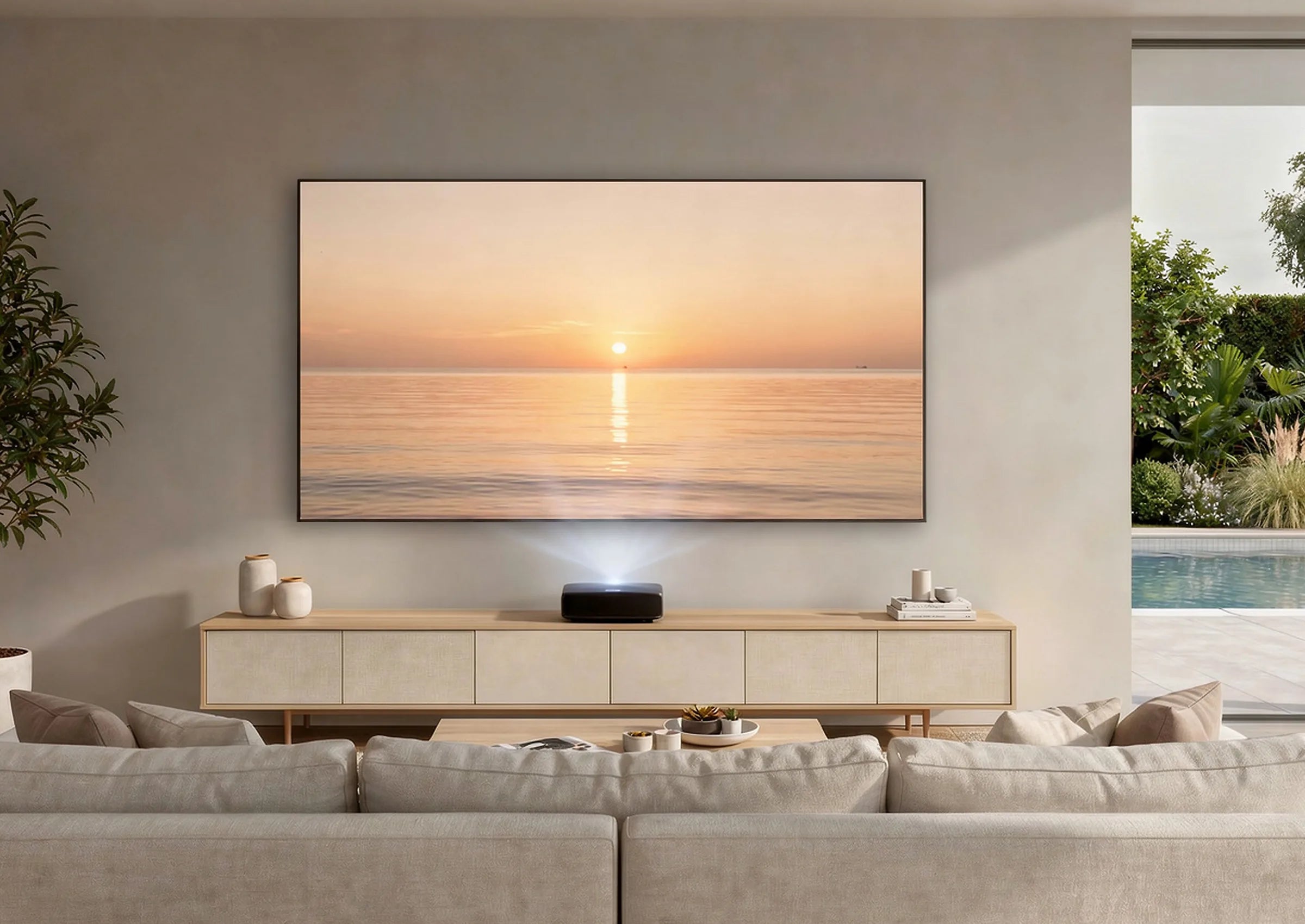
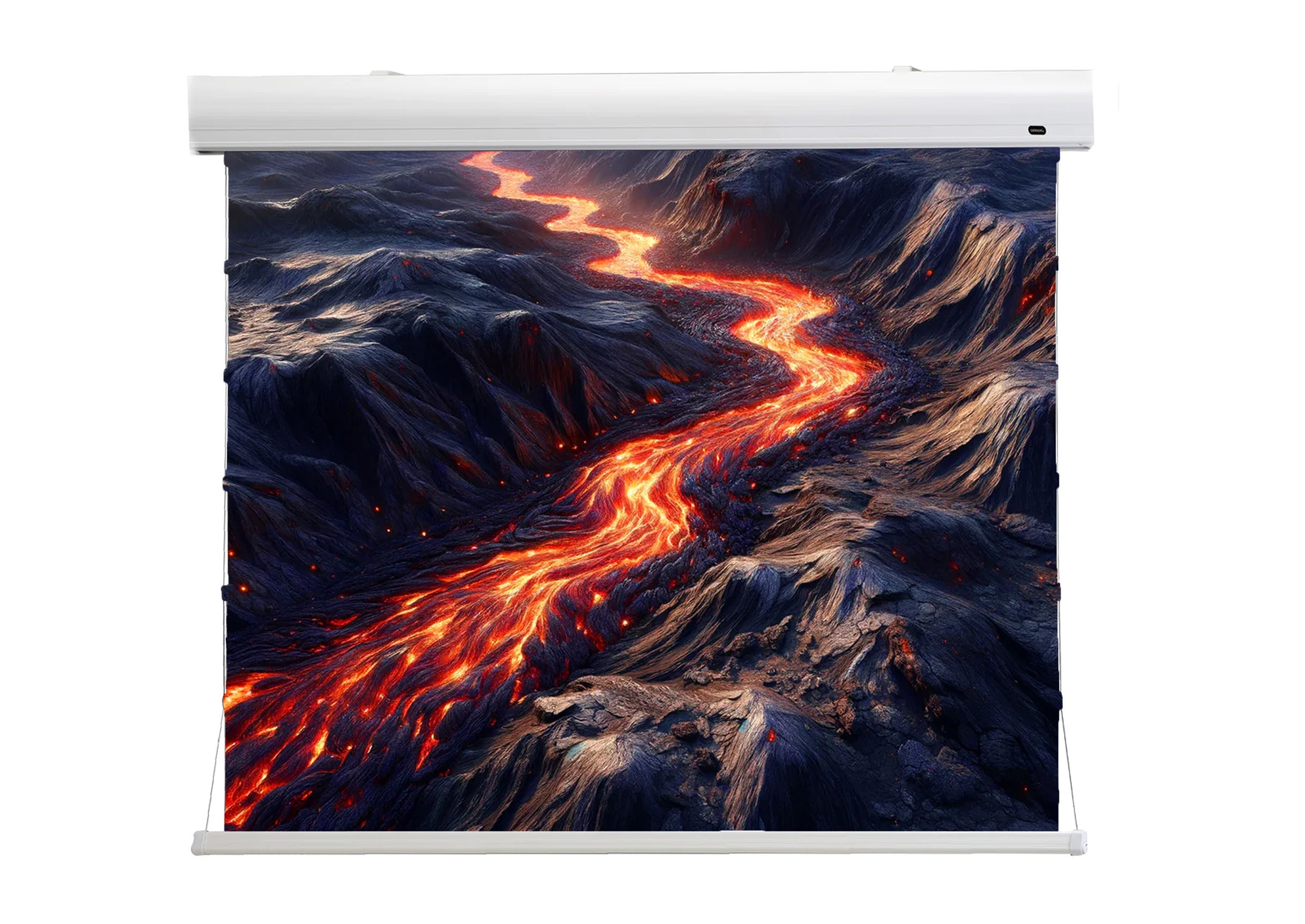
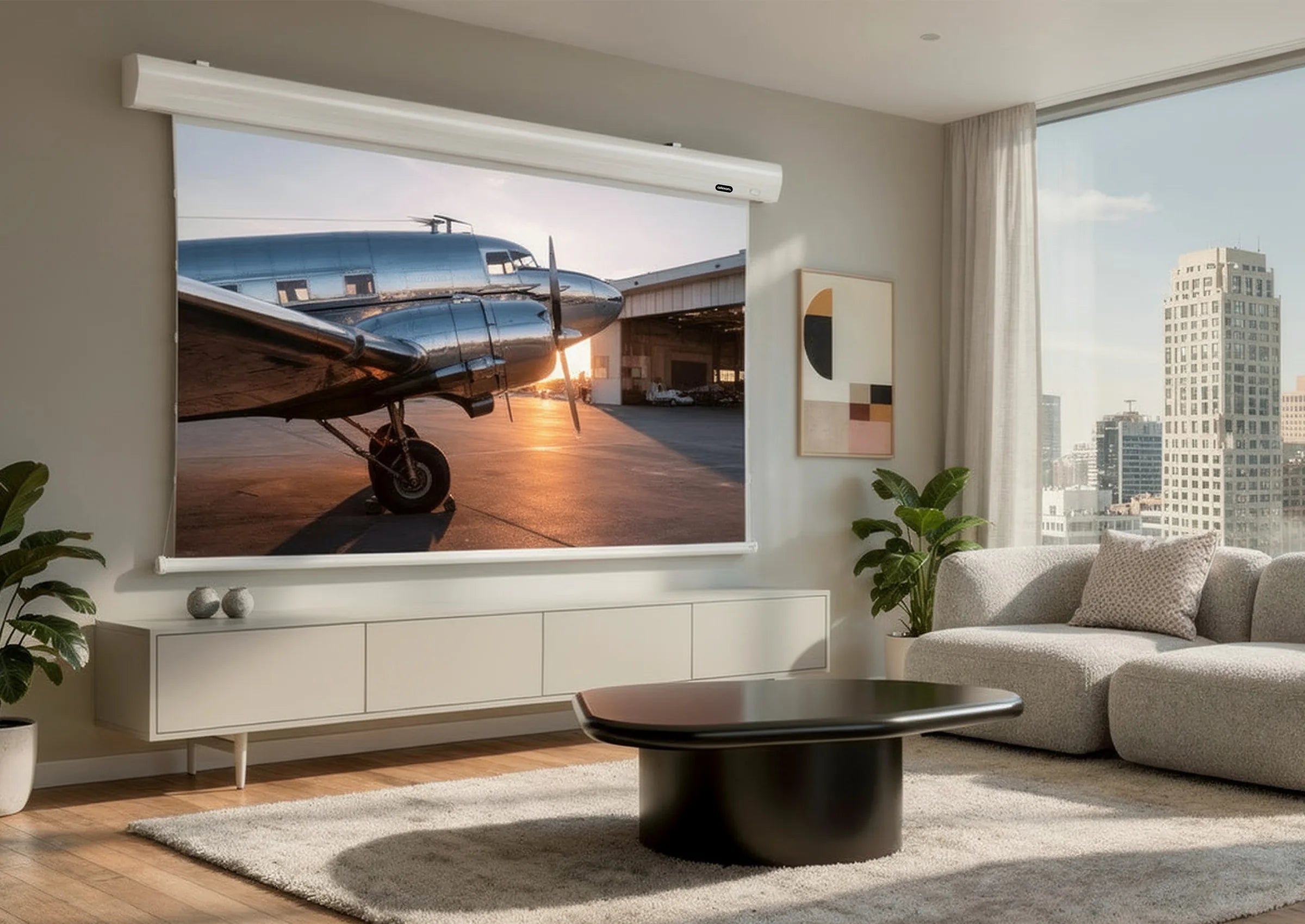
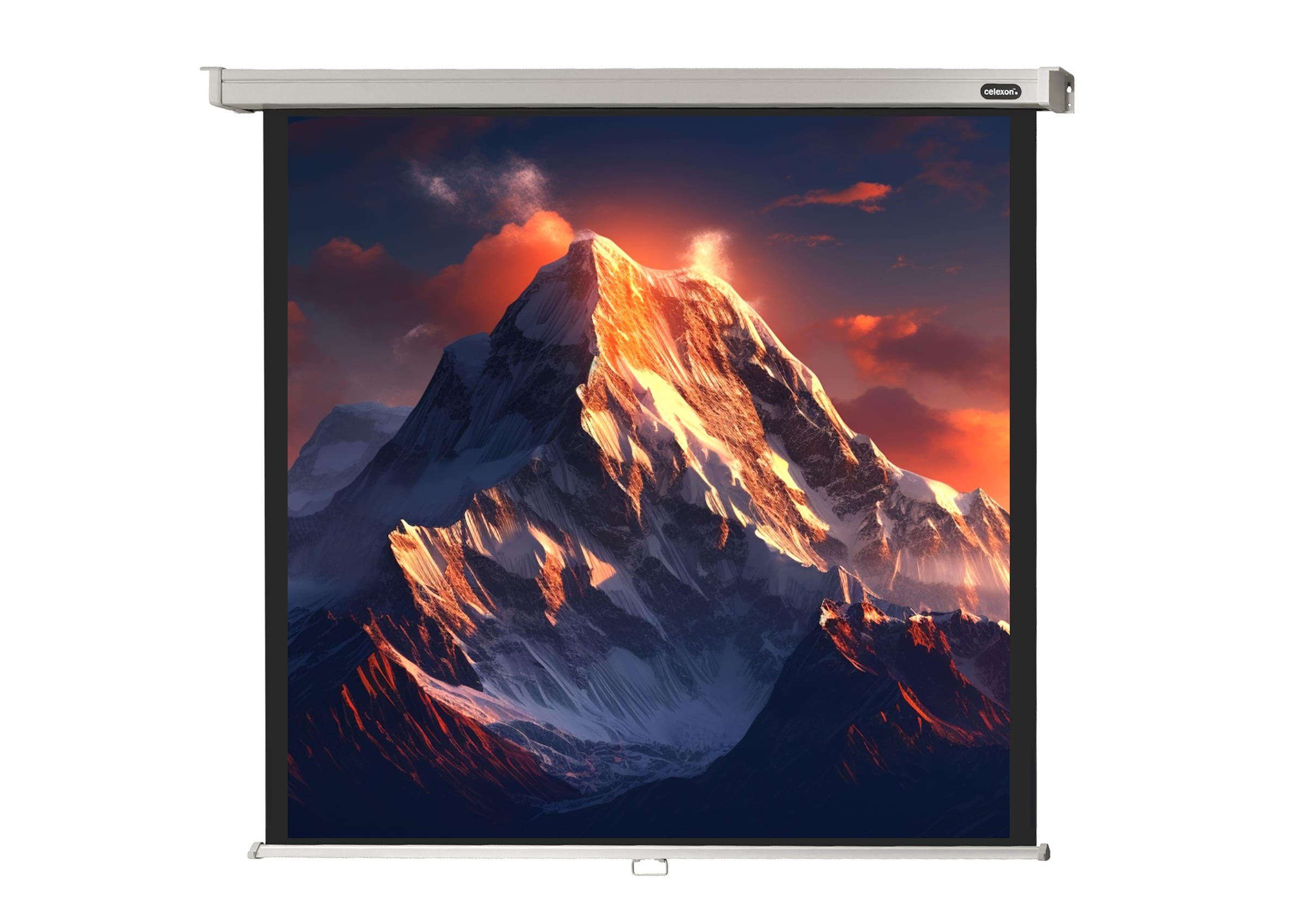
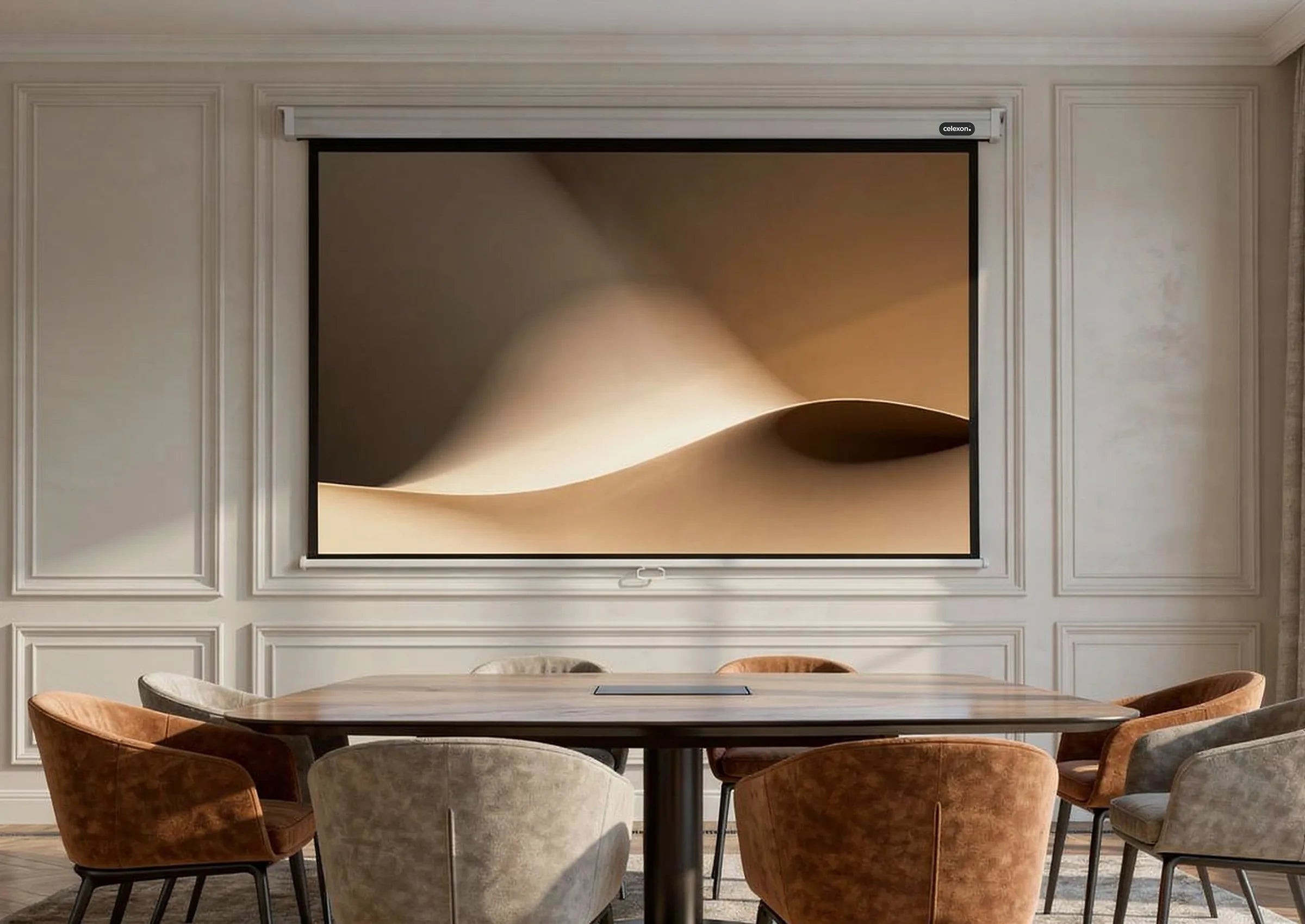
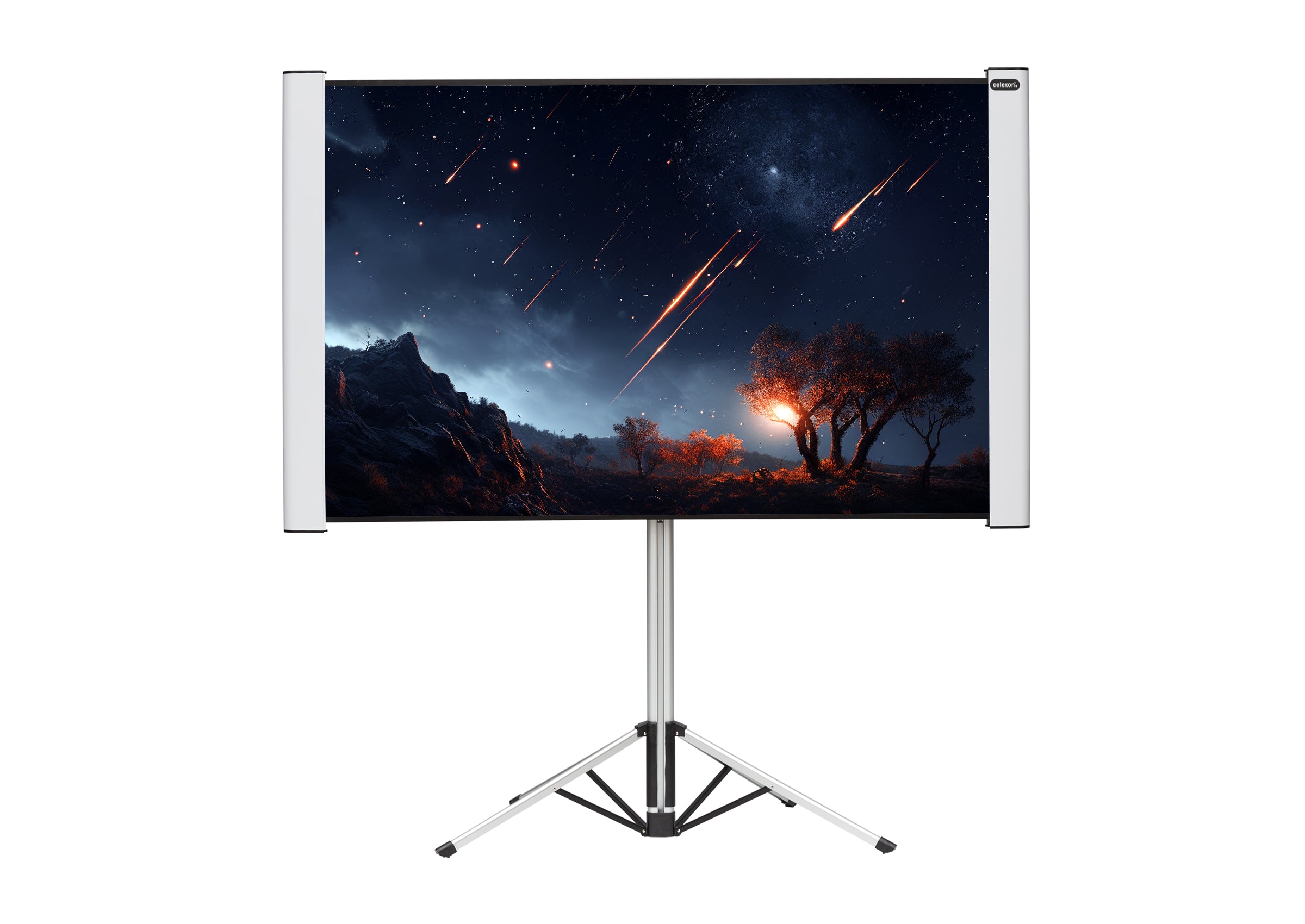

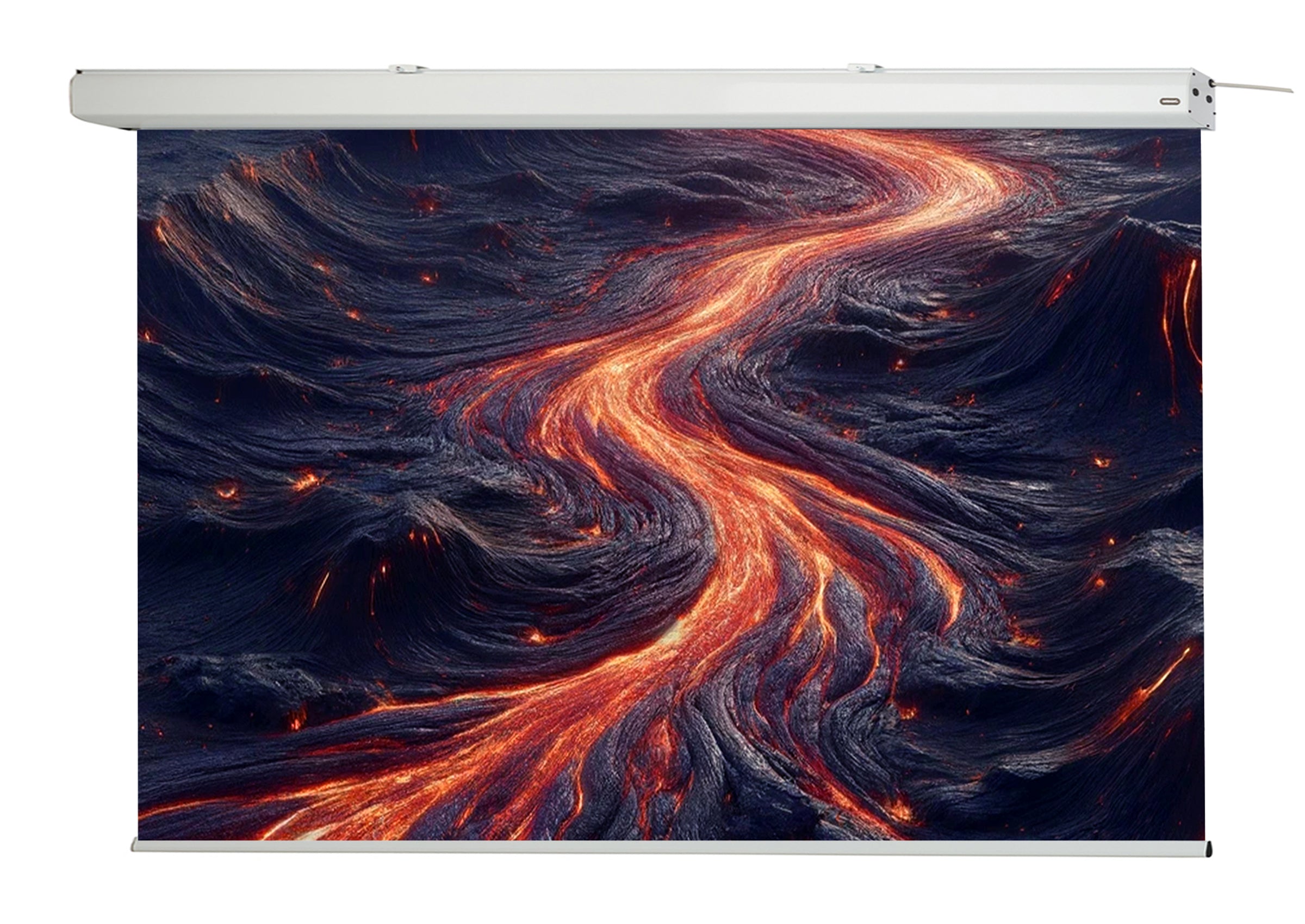
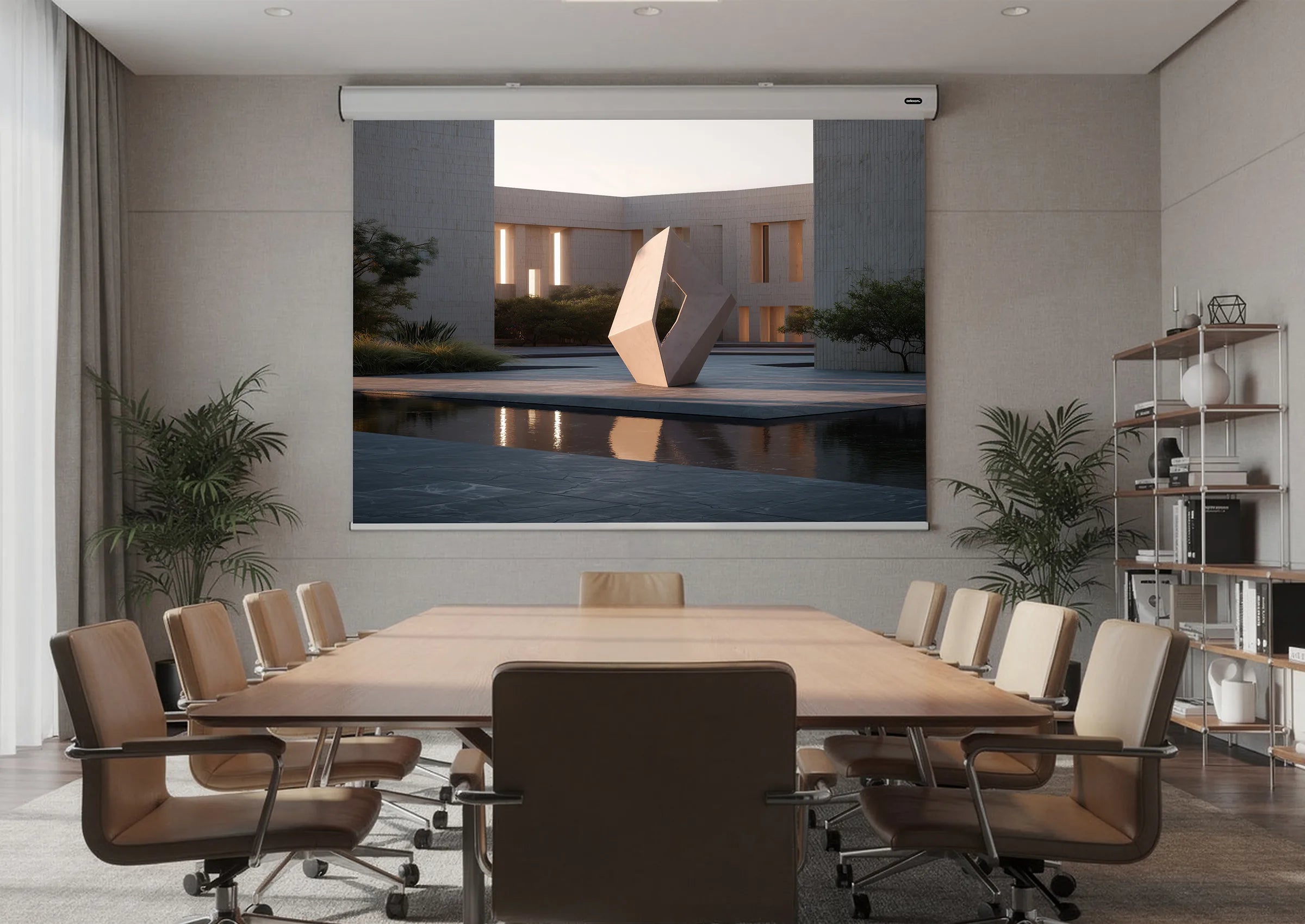
Projection screens from celexon – Perfect projection for home cinema & business
Whether it's a cinematic home cinema experience, a compelling business presentation or a modern classroom – with a celexon projection screen you get the best out of your projector. For over 20 years, celexon has been developing projection solutions as one of Europe's leading manufacturers, convincing in quality and functionality.
Our projection screens are designed for Full-HD, 4K and 8K projectors and, thanks to high-quality projection surfaces, ensure brilliant colors, strong contrast and razor-sharp images – free from wrinkles and distortions. Whether it's a motorized ceiling installation, a space-saving manual roll-up screen, a tensioned frame home cinema solution or a mobile tripod screen for on the go: celexon offers the right solution for every room situation and every requirement.
Why a celexon projection screen?
- Crystal-clear projection – Perfectly matched to Full-HD, 4K & 8K projectors
- High-contrast technology – ALR/CLR materials for compelling images even in bright rooms
- Durable & resistant – High-quality materials for long-term use
- The right solution for every room – From small conference rooms to large event areas
- Professional advice & custom manufacturing – Individual solutions for special requirements
- Fast delivery – Over 1,200 celexon products ready for immediate dispatch
Still unsure which model is right for you? Use our buying guide for projection screens and find the perfect model for your requirements!
Projection screens from celexon – Perfect projection for home cinema & business
Whether it's a cinematic home cinema experience, a compelling business presentation or a modern classroom – with a celexon projection screen you get the best out of your projector. For over 20 years, celexon has been developing projection solutions as one of Europe's leading manufacturers, convincing in quality and functionality.
Our projection screens are designed for Full-HD, 4K and 8K projectors and, thanks to high-quality projection surfaces, ensure brilliant colors, strong contrast and razor-sharp images – free from wrinkles and distortions. Whether it's a motorized ceiling installation, a space-saving manual roll-up screen, a tensioned frame home cinema solution or a mobile tripod screen for on the go: celexon offers the right solution for every room situation and every requirement.
Why a celexon projection screen?
- Crystal-clear projection – Perfectly matched to Full-HD, 4K & 8K projectors
- High-contrast technology – ALR/CLR materials for compelling images even in bright rooms
- Durable & resistant – High-quality materials for long-term use
- The right solution for every room – From small conference rooms to large event areas
- Professional advice & custom manufacturing – Individual solutions for special requirements
- Fast delivery – Over 1,200 celexon products ready for immediate dispatch
Still unsure which model is right for you? Use our buying guide for projection screens and find the perfect model for your requirements!


Projection screen types: Fixed or mobile screens – Which one suits you?
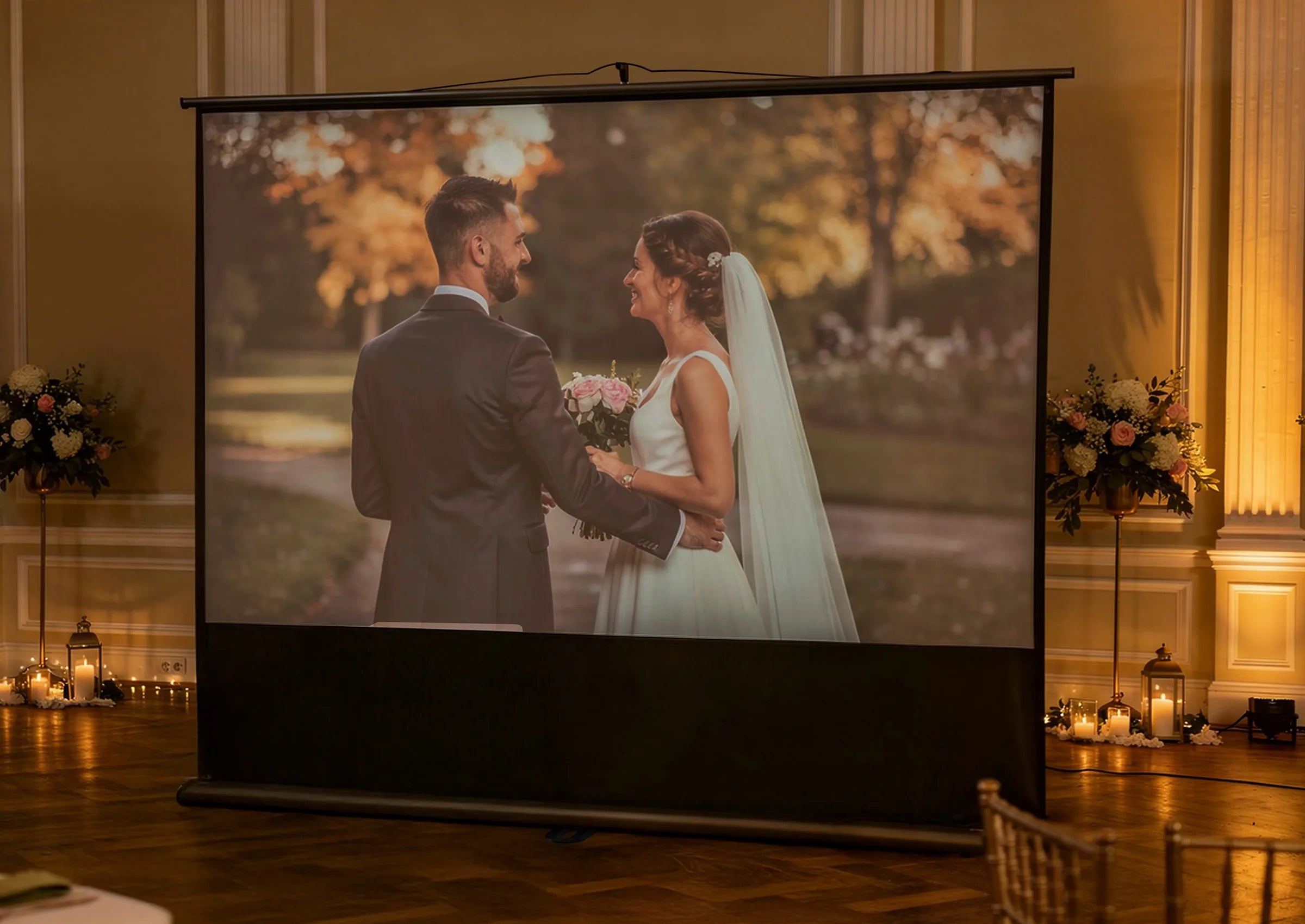
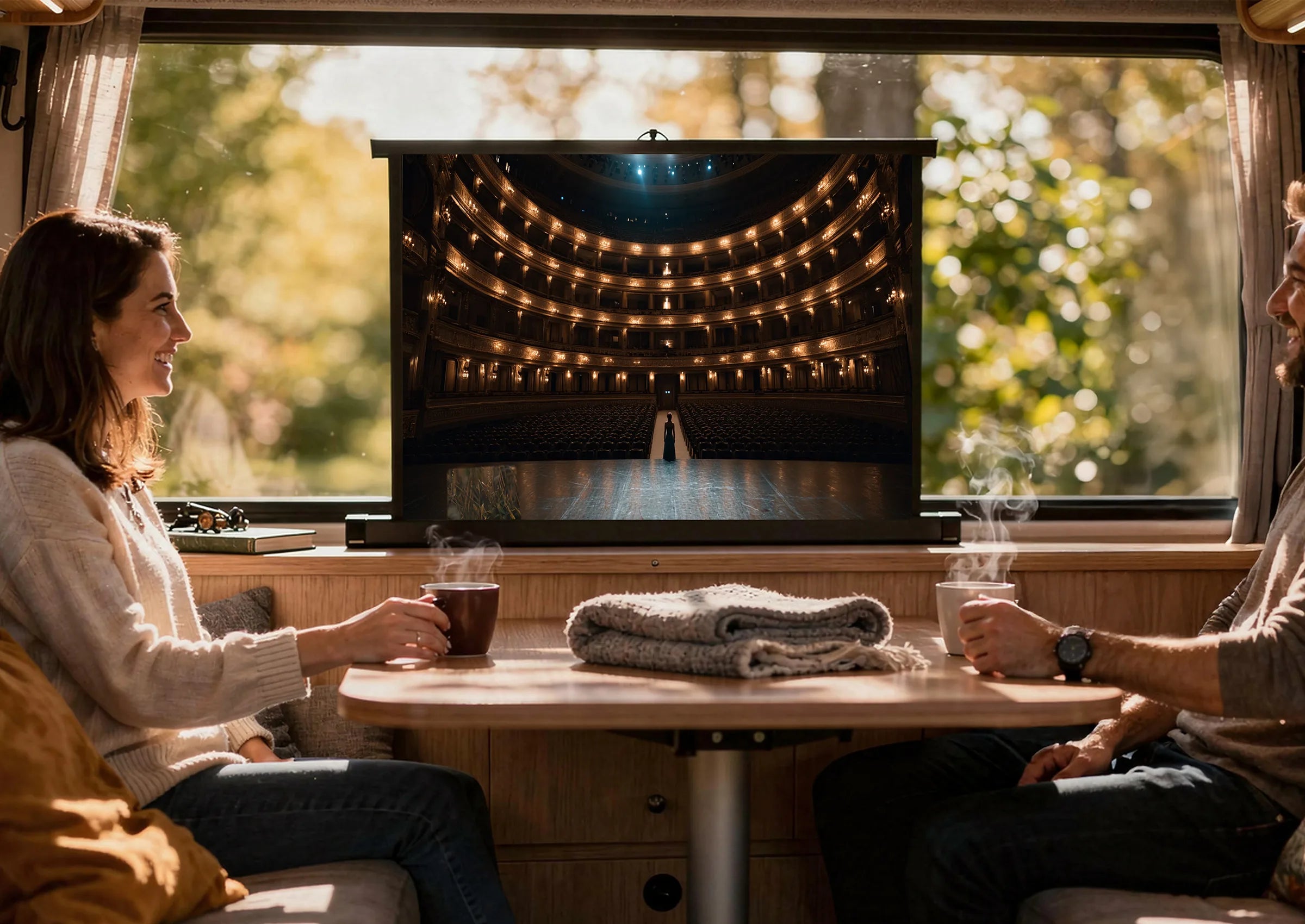
Whether permanently installed or flexibly deployable – at celexon you will find the ideal projection screen for your individual needs. Opt for a fixed projection screen for your home cinema or office if you prefer a permanent, high-quality projection solution. Or discover our mobile screens, which are ideal for meetings, training sessions or outdoor movie nights – flexible, easy to transport and quick to set up.
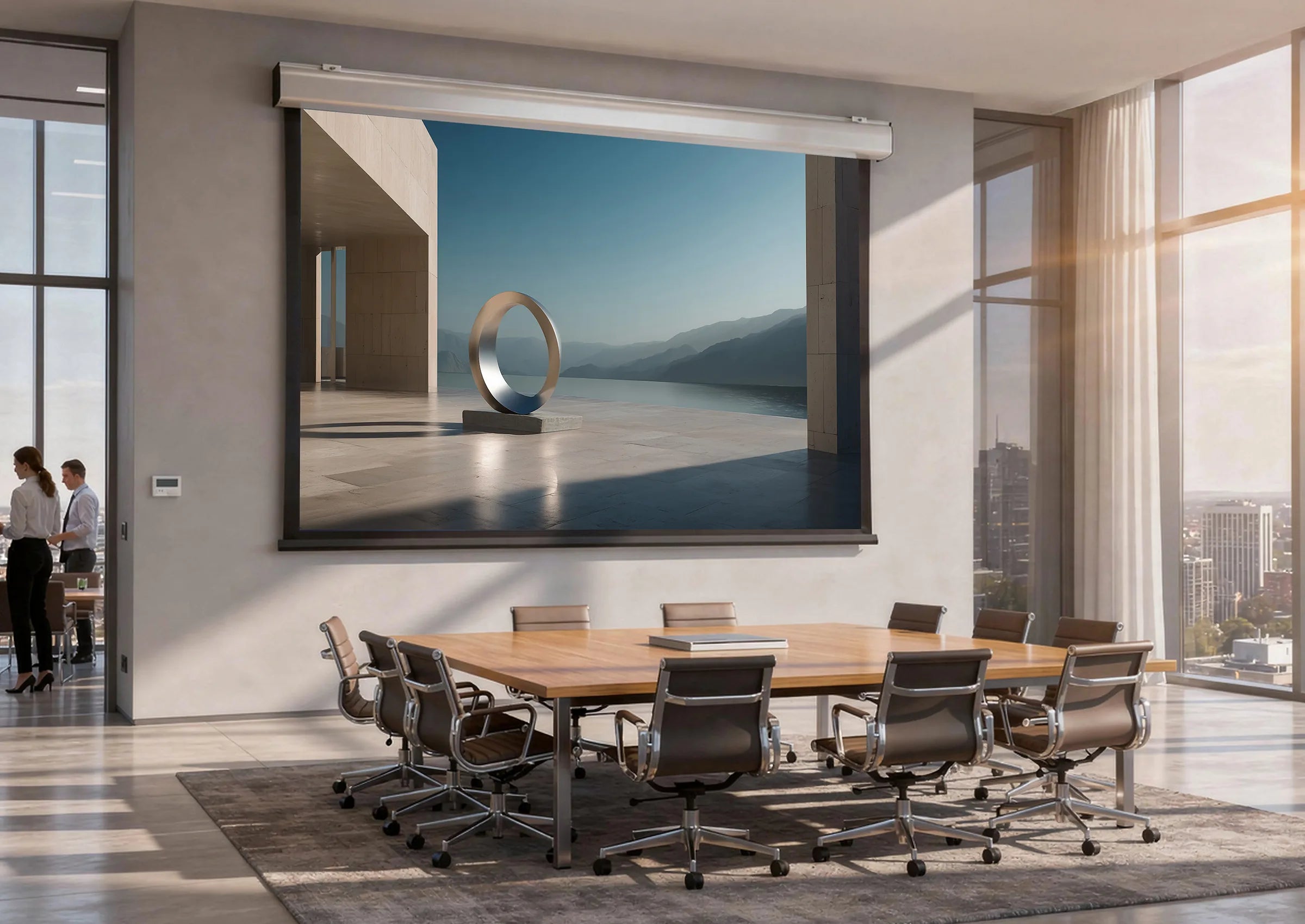
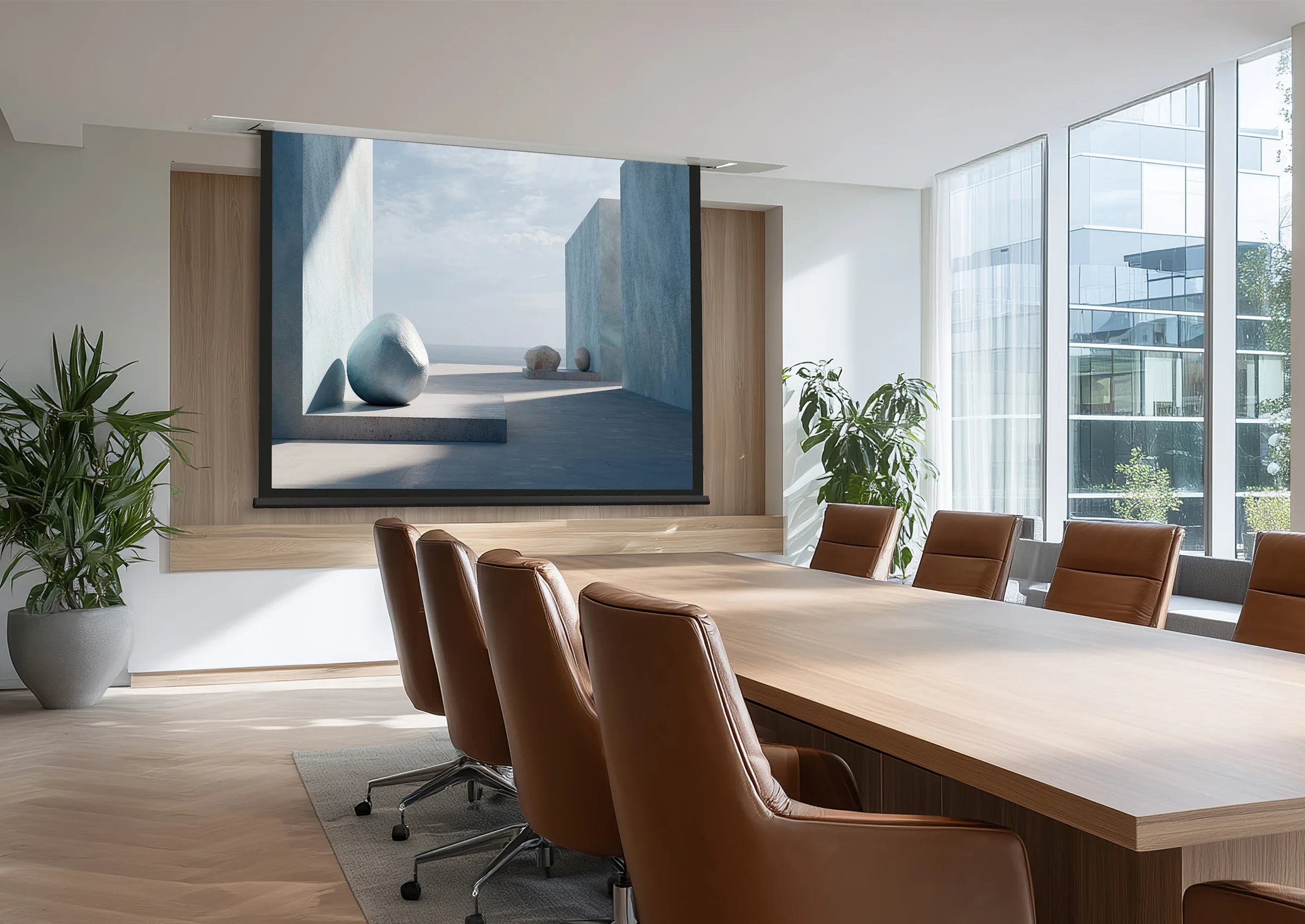
Fixed screens
Fixed projection screens – Perfect for home cinema & presentations
- Crystal-clear image reproduction – High-quality materials for sharp projections in 4K & 8K
- Perfect flatness – No warping or distortions thanks to precise manufacturing
- Ideal for regular use – The perfect solution for offices & home cinema setups
- Various types – Motorized screens, manual roll-up screens & frame screens
Mobile projection screens
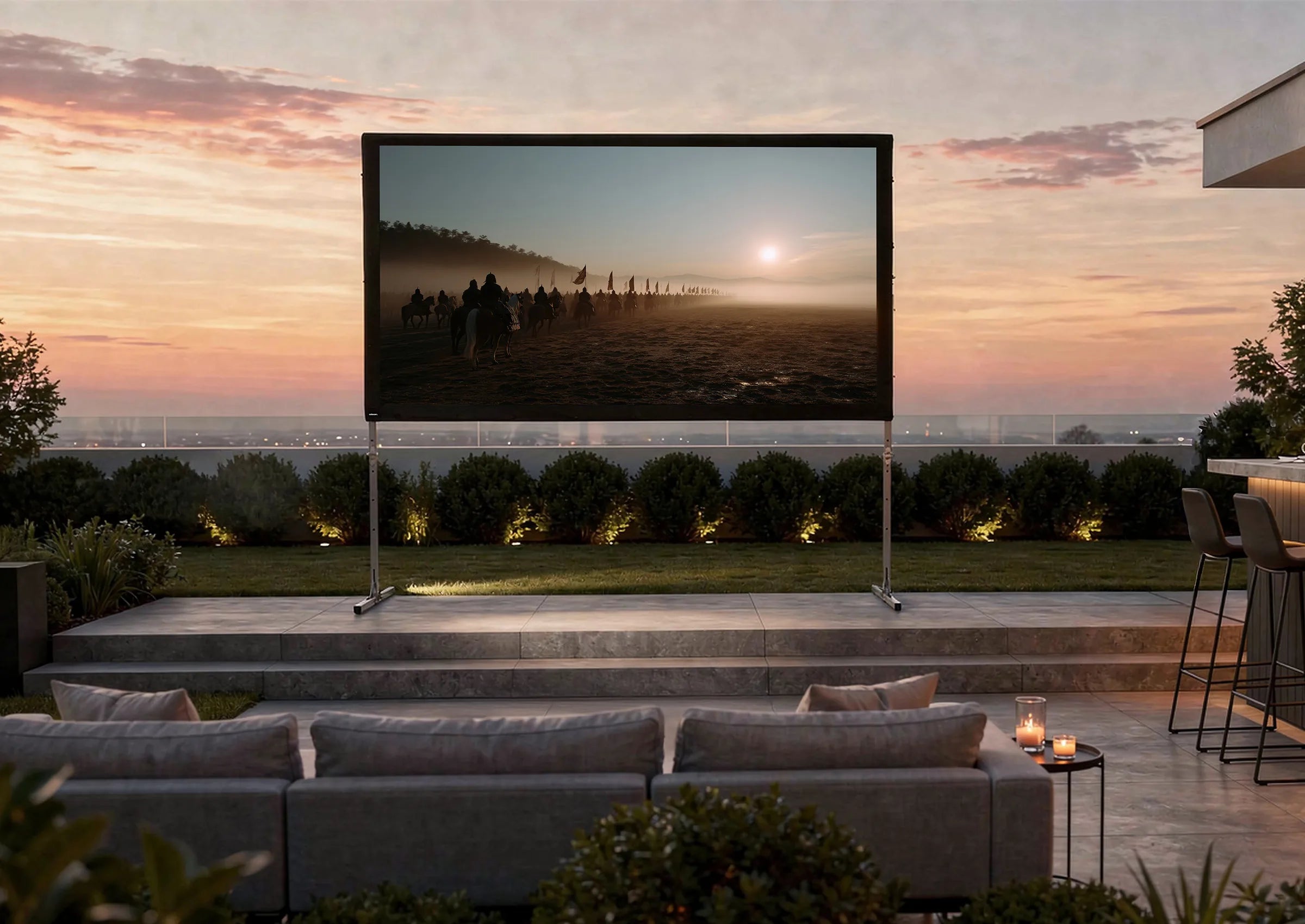
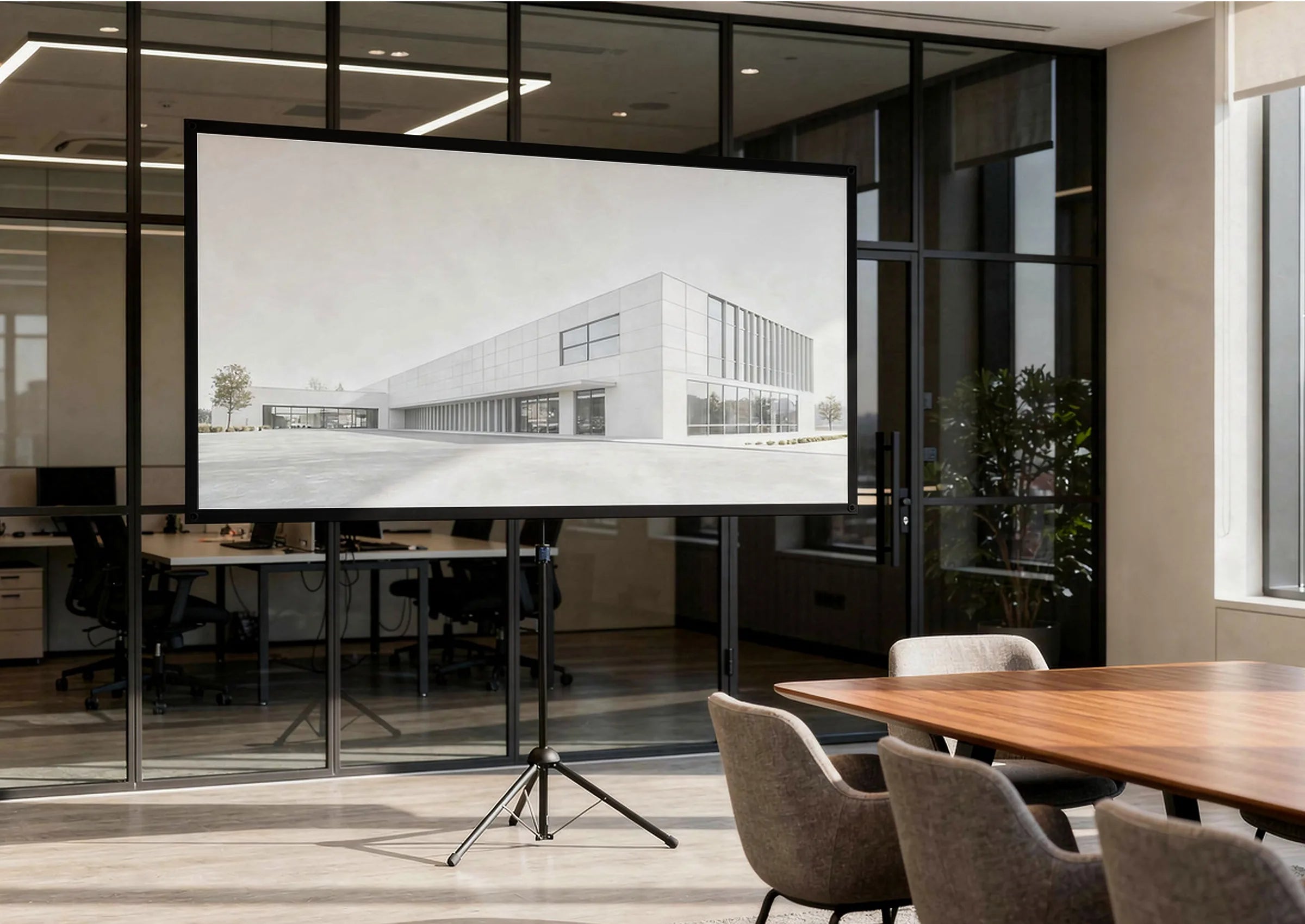
Mobile projection screens – Maximum flexibility on the go
- Quick & easy to set up – Ideal for spontaneous presentations & movie nights
- Light & portable – Compact design for effortless transport
- Robust & durable – High-quality materials for the best image quality, even on the go
- Universally compatible – Perfect for all common projector manufacturers
Projection screen formats – Which format is right for you?
Whether home cinema, business presentations or training sessions – choosing the right projection screen format is crucial for an optimal viewing experience. At celexon you will find a wide selection of 1:1, 4:3, 16:9, 16:10 and 21:9 projection screens, perfectly tailored to your requirements. Use our screen guide to find out which screen format best suits your projector or intended use!
All formats briefly summarized:
1:1 format
The 1:1 format is a classic, square screen size, frequently used in schools, universities and business presentations. It is ideal for overhead projections and allows flexible adaptation to various types of content.
4:3 format
The 4:3 format is considered the classic standard format for presentations and was for a long time the preferred aspect ratio for projections. This format is particularly well-suited for training sessions, older presentation systems and PowerPoint slides.
16:9 format
The 16:9 format is the modern standard for home cinema, gaming and business presentations. As a widescreen projection screen, it is ideal for 4K and 8K projections and is preferably used for films, series and video games. Perfect for an immersive viewing experience!
16:10 format
The 16:10 format is a wider alternative to 16:9, particularly suited for business presentations, tables & charts. Thanks to the additional vertical space, it is ideal for graphics, Excel spreadsheets & multitasking on widescreen monitors.
21:9 format
The 21:9 format is the ultimate panoramic aspect ratio for high-end home cinema & gaming. With an extra-wide display, it creates a cinematic experience and is perfect for ultrawide monitors, Cinemascope films & immersive simulations.
The 1:1 format is a classic, square screen size, frequently used in schools, universities and business presentations. It is ideal for overhead projections and allows flexible adaptation to various types of content.
The 4:3 format is considered the classic standard format for presentations and was for a long time the preferred aspect ratio for projections. This format is particularly well-suited for training sessions, older presentation systems and PowerPoint slides.
The 16:9 format is the modern standard for home cinema, gaming and business presentations. As a widescreen projection screen, it is ideal for 4K and 8K projections and is preferably used for films, series and video games. Perfect for an immersive viewing experience!
The 16:10 format is a wider alternative to 16:9, particularly suited for business presentations, tables & charts. Thanks to the additional vertical space, it is ideal for graphics, Excel spreadsheets & multitasking on widescreen monitors.
The 21:9 format is the ultimate panoramic aspect ratio for high-end home cinema & gaming. With an extra-wide display, it creates a cinematic experience and is perfect for ultrawide monitors, Cinemascope films & immersive simulations.

Tailor-made solutions for your project
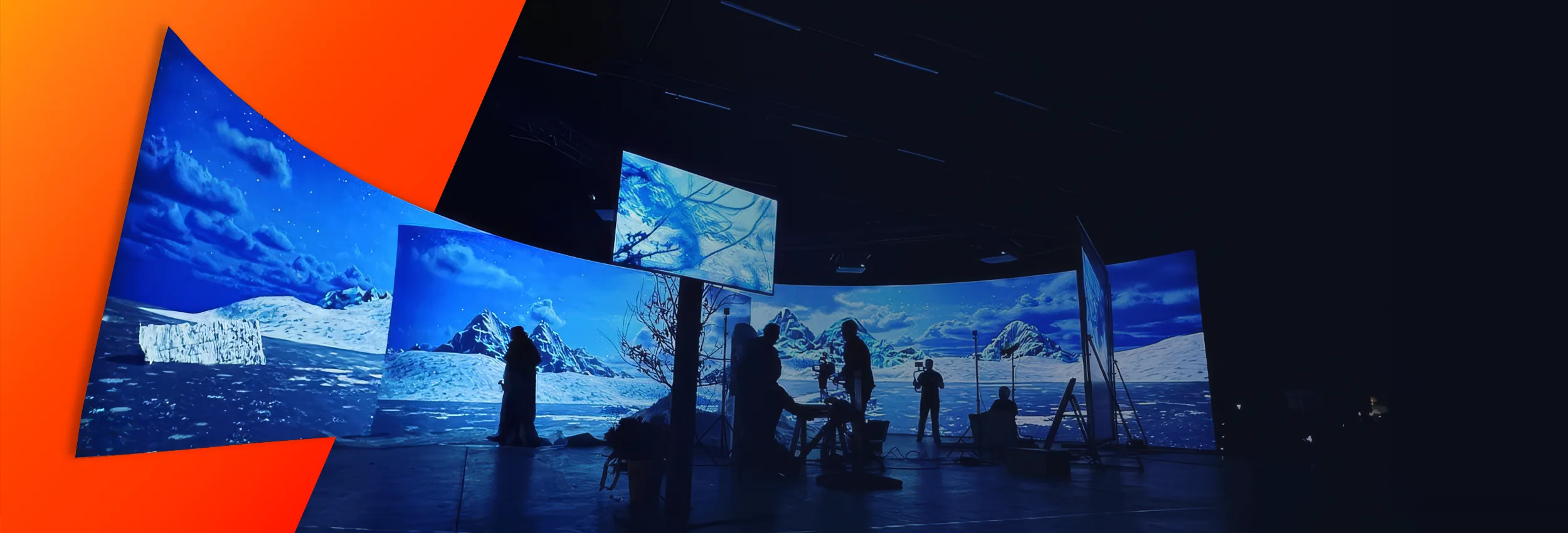
Every environment has special requirements for projection screens – whether for architecture, events, film productions or high-end home cinema. Our custom-made projection screens offer you perfect image quality & maximum flexibility – exactly according to your needs.
The perfect projection screen for every application
celexon projection screen series
Economy
Perfect for beginners & occasional users looking for an affordable projection screen with solid image quality. Supports Full-HD resolution, is optimal for front projections and impresses with simple, quick installation.
Professional (Plus)
The perfect projection screen for companies, schools & conference rooms! The Professional series is designed for intensive, daily use and impresses with a robust projection material, stable construction and easy installation – ideal for presentations & training sessions.
HomeCinema
The perfect home cinema projection screen for film and series enthusiasts! With a high-quality projection material from the Professional series, a modern housing and various variants – manual roll-up screen, electric and high-contrast – it delivers brilliant colors and a true cinematic experience within your own four walls.

Expert
For those who only want the best: The Expert series stands for the highest quality & technical perfection. Developed for 4K & 8K projections, it offers flawless image reproduction without compromise – ideal for premium home cinemas, high-end business presentations & professional film studios.
High-contrast screens (ALR & CLR) – Perfect projection in ambient light
Maximum image quality even in bright rooms! Our ALR (Ambient Light Rejecting) & CLR (Ceiling Light Rejecting) screens were specially developed for laser TVs & UST projectors and ensure deep black levels, high contrast and rich colors, even in daylight. They eliminate disruptive reflections and enable a brilliant viewing experience with maximum image sharpness and color accuracy – perfect for home cinema & business presentations.

ALR – Ambient Light Rejecting
An ALR screen is specially designed to absorb disruptive ambient light from the room while optimally reflecting the projector's image. The special surface structure deflects light falling in from the side – such as from windows or ceiling lights – in a targeted manner, while the projection light is amplified and reflected back frontally. The result: rich colors, high contrast and a brilliant image, even when the room is not completely darkened. ALR screens are ideally suited for living rooms, conference rooms and all environments where ambient light cannot be fully controlled.

CLR – Ceiling Light Rejecting
CLR screens are a further development of ALR technology and are specially designed for use with ultra-short throw projectors (UST). Since UST projectors project the image from a very flat angle directly in front of the screen, the screen must capture this precise beam of light while simultaneously suppressing light coming from the ceiling. The micro-structured surface of a CLR screen is precisely matched to this angle of incidence: it optimally reflects the projection light and reliably absorbs disruptive ceiling light. The result is an exceptionally high-contrast image – even during the day and with the lights on.

Fresnel
Fresnel materials are based on a ring-shaped, stepped surface structure that directs the projector's light towards the viewer in a targeted manner. At the same time, this structure effectively repels disruptive ambient light from other angles – particularly from above and from the sides. This creates a high-contrast, sharp image with rich colors and deep blacks, even in rooms with a lot of daylight or artificial lighting.
Projection screen or TV? The comparison for the best home cinema experience
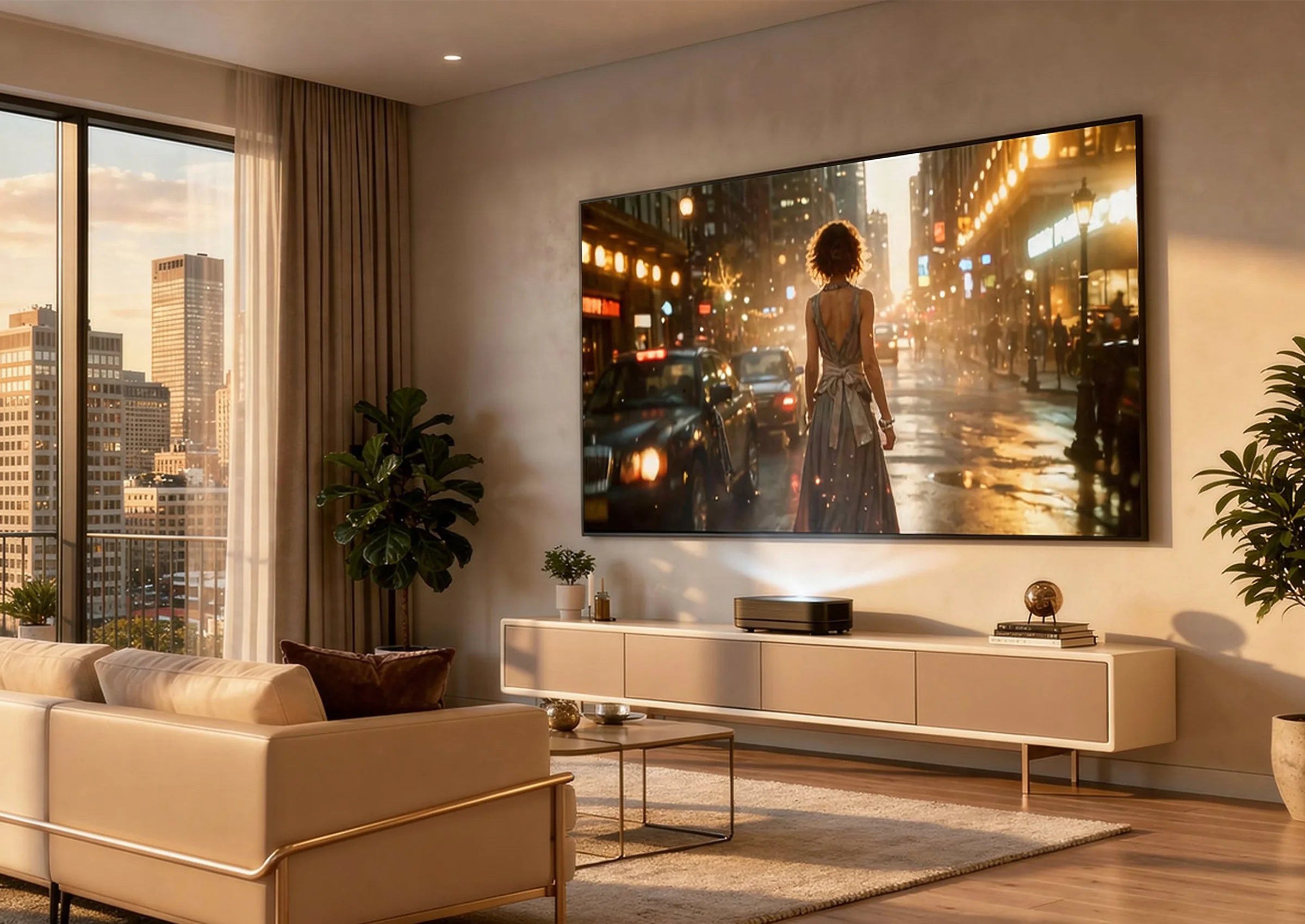
Those looking for a large, impressive viewing experience are often faced with the choice: projection screen or TV? Modern televisions offer impressive technology, but above 80 inches the projection screen has clear advantages – both in terms of image size, value for money and flexibility.
Why is a projection screen the better choice from 80 inches?
- More picture for less money – A 100-inch TV often costs many times more than a projector with a screen.
- Cinema feeling instead of TV limitations – While televisions usually top out at 85 inches, projection screens are possible up to 300 inches.
- Easier on the eyes than a television – The diffused light of a projection screen is more comfortable for the eyes than the direct LED light of a TV.
- More flexibility & space saving – A projection screen can be easily rolled up & hidden away, while a large TV always remains visible.
- Longer service life – With projectors the lamp can be replaced, while televisions are often difficult to repair.
For true large-screen experiences from 80 inches, a projection screen is the better choice – more affordable, more flexible & easier on the eyes!

TV

Projection screen

Projection screen guide
In this guide we show you what to look out for when choosing your projection screen and what the individual technical terms mean.
Discover now!Frequently asked questions:
Why does my projection screen have waves or creases – and what can I do?
Slight waves or creases are not unusual with new projection screens or after transport. The material must first "settle" and build up the correct tension. In many cases such irregularities disappear on their own when the projection screen remains fully extended for a few days. A comfortable room temperature can additionally support this process. Should the waves persist permanently or be very pronounced, it is advisable to have the projection screen checked.
Which wall spacer / ceiling mount fits my projection screen?
Which mount is suitable depends primarily on the model and the conditions in the room. In many cases, direct wall or ceiling mounting is sufficient. However, if there are obstacles such as radiators or furniture in the way, spacers may be useful. In high rooms or special installations, ceiling mounts are frequently used. The decisive factor is that the weight, mounting points and compatibility match the projection screen.
How do I re-pair the remote control / what are the IR codes?
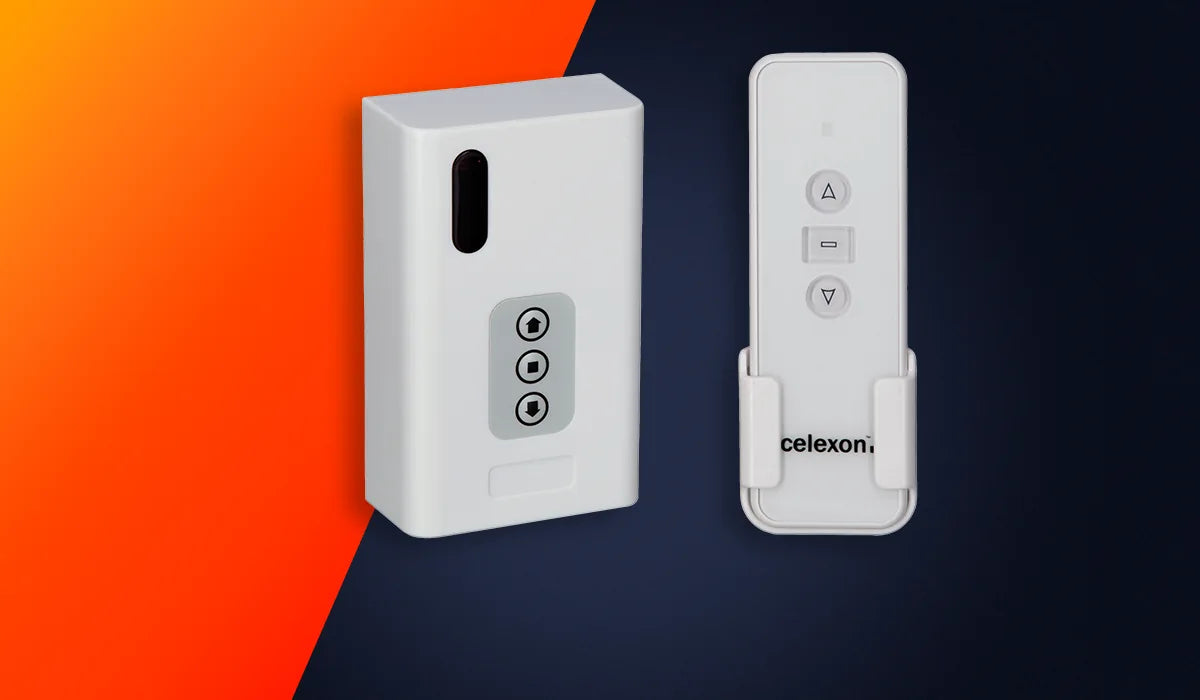
Pairing a remote control differs depending on the model. Radio remote controls are usually taught directly at the receiver, while infrared remote controls require a clear line of sight to the sensor. The exact steps and any IR codes are always listed in the respective operating manual.
Which projection screen is compatible with my UST projector?
For ultra-short throw projectors you need a projection screen specially developed for this purpose. This is equipped with a so-called CLR or ALR material that reflects light in a targeted manner and reduces disruptive ambient light. Conventional projection screens are generally unsuitable for this type of projection, as they can significantly deteriorate the image. In our range we have a wide variety of electric and frame screens designed for UST projectors. You will find a note on the applicable projection type on each of our projection screens.
How do I connect the radio trigger / 12V trigger?
A 12V trigger ensures that the projection screen automatically extends as soon as the projector is switched on. The connection is made via an enclosed cable between the projector and the projection screen with a 3.5 mm audio jack connector. It is important that the voltage and connectors are compatible.
The projection screen is jammed / the locking mechanism cannot be released
If a manual projection screen jams, this is often due to the locking mechanism. In many cases it helps to pull the projection screen out a little further and then slowly let it lock back into place. It is important to use a smooth movement without jerking, so as not to damage the mechanism.
Where can I obtain the fire protection certificate (M1 / B1 / PV feu)?
Here you will find our fire protection certificates.